The Break

This spring I was working very part-time at a church while I continued a multi-year search for a full-time, permanent position. I was strapped for cash and hope. As I marked my 250th job application, I felt overlooked and frustrated.

The waiting was the hardest part of those years. For all of the hours I spent searching the internet, applying for jobs, and praying, I spent hundreds more waiting. I learned then that waiting can deplete energy faster than any other activity.

As the waiting stretched on, I began to feel diminished. I joked more than once that I was experiencing brain atrophy, but I wasn’t laughing. I was so emotionally exhausted that sometimes I lost my train of thought and stopped in the middle of a sentence. The worst thing in all of this was feeling like I’d lost touch with the vibrant person I am.

Last winter, during the miserable waiting, I went on a spiritual retreat and spent an hour slowly walking a labyrinth. The path was shaped by mismatched rocks on top of sparse Arizona earth. I was so focused on the rhythm of my steps and my prayers, that I missed most of my surroundings. But then, there was a moment when I looked ahead, saw, and stopped. On the ground along a particularly sharp corner of the labyrinth, was a sprig of pale green topped with a single flower. The petals were an apricot color kissed with sunshine. It was a desert poppy, its presence so cheerful and carefree in the middle of so much dust, that I started to cry.

desert poppy

This is the color of my spirit, I thought. This is the joy I’ve lost touch with.

A couple of weeks after that, I applied for the job in Hawaii and few weeks later the principal called to offer me the job. I’d told God that couldn’t face another month of idling, so even though the job was temporary, I accepted it as a gift straight from Heaven. Working with children had never been on my professional bucket list, but I’ve always loved kids, so I thought — why not? At the very least, it would be a break from financial stress and job searching. I was sure to learn something new. To stimulate and engage my mind again. The change might revive my energy and maybe the youthfulness of the students would slough away some of my calluses.

Now it’s December and my last week in Hawaii. It’s been seven months packed with rich experiences, far too many to recount here. The students did revive me. Everywhere I went on campus I’d hear, “Hello Chaplain Gustafson!” Sometimes it was Gusterson, Guftasin, or Gustussin, but it was always endearing. The children just saw me. They accepted me and loved me. I never felt like I had to prove myself to them or perform for them. I could just be me, offer whatever was in my spirit that day, and that was enough. This is the kind of hospitality that extended job searching had sucked out of my life.

One of the most beautiful things about Hawaiian culture is the tradition of giving a flower lei. Most visitors think this is a cute, touristy thing that only happens at the airport or in the lobbies of fancy hotels. For those who live here, giving a lei is a sign of affection and respect. You give one to mark a special achievement or occasion, but more importantly, to honor the recipient.

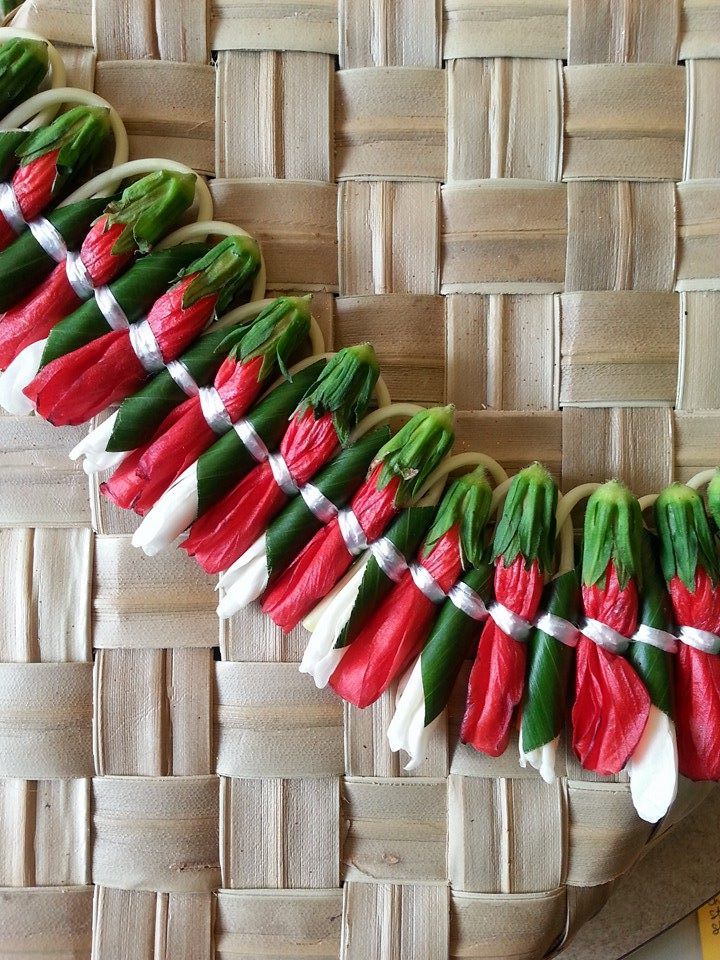
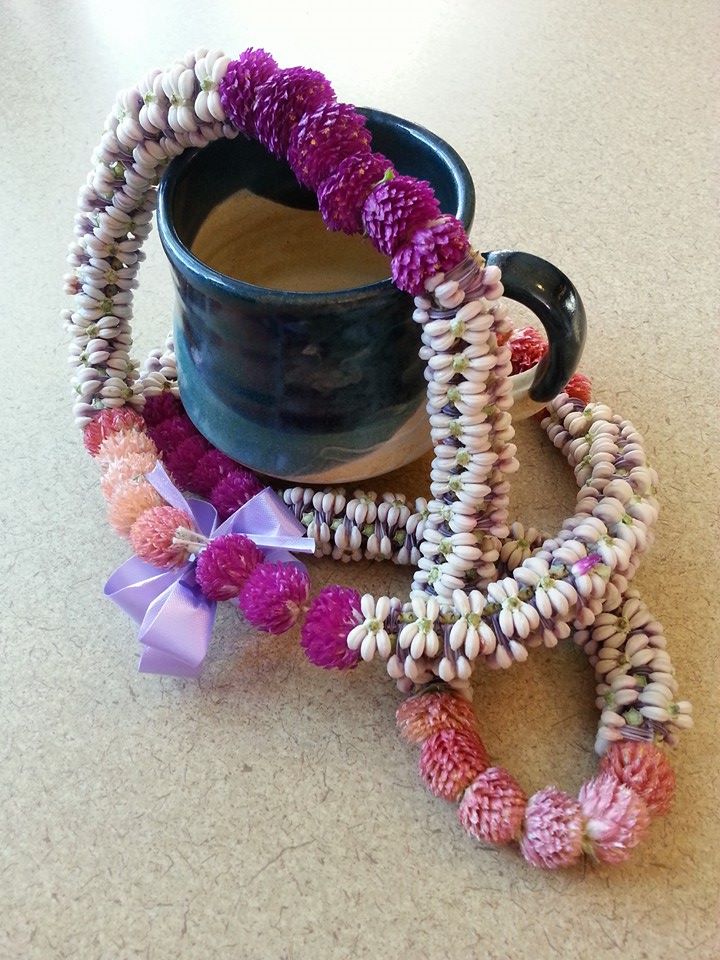
For almost every chapel I led this fall, the class helping me would present me with a lei. This ring of flowers always came with words of thanks and a hug that I would have to kneel to receive. Their variety and colors dazzled. Their sweet fragrance circled me all day, everywhere I went. With a lei around my neck, I couldn’t go unnoticed; their scent drew people to me.

10628512_10152564595396033_6805850627637071050_n10441180_10152560215611033_4391112806883448508_n1965470_10152434835876033_3472058209123031008_o10408813_10152530799931033_3399342177313543541_n10447705_10152566520361033_7692000281253738569_n
1400825_10152564596416033_3284993411088342605_o10154963_10152458796021033_6959451029884652036_n10389203_10152566520101033_8063201499236345565_n10703730_10152378132136033_3904679911730357551_n1609605_10152492203791033_5142464929531473611_n
Because of my story before Hawaii, lei have spiritual significance to me. Each time someone placed one around my neck, a piece of my exhaustion fell away. As flowers piled up, frustrations lost their weight. Just a few months ago I felt invisible and diminished, but now I feel strong and happy. Receiving these lei was like being hugged by God — there was no chance of staying small. Thanks to God, thanks to this job and a promise of a future job, and thanks to these beautiful, giving children, joy is a regular experience again. I’m in full bloom.

A few weeks ago I walked to work in a downpour. I waded through ankle-deep puddles, got splashed by passing cars and sighed as my umbrella leaked drops of cold rain on my head. I am not a morning person, so walking through a storm at 7am put me in a terrible mood. But as I passed the pool on my way to the chapel, there was a break in the gray clouds above the trees. Behind them I could see clear blue sky threaded with brilliant rays of sunlight.

10665810_10152530798706033_2276501508737226842_n

There I was, waterlogged and grumpy, but God was winking. Welcoming me to a new day. Reminding me that there are good things to come.

Seeing the break in the clouds, I smiled, and hoped.

Hospitality: More Than Teacups and Tablecloths

Spain San FerminI’d rather run with the bulls in Pamplona than host a dinner party. Cooking for groups totally flusters me – an otherwise capable, confident woman – because it means I have to manage prepping and cooking multiple dishes on different surfaces at different heats for varying lengths of time. The goal of this madness is to get each dish to the table at the same time, hot and at optimal consistency. You might as well ask me to conduct the New York Philharmonic or control the air-traffic at Chicago O’Hare. I may have a Master’s Degree in Divinity but my superpowers melt in the kitchen.

My friend Sheri is the ultimate hostess. Seriously, get this woman a cape. Sheri thrives on large dinner parties. An invitation to the Cross house is like a golden ticket to food paradise: bowls of snappy mixed nuts on every side table, trays of crisp veggies with tangy dip, a selection of fine crackers with your choice of gourmet spreads that are an explosion of flavor in your mouth, the sumptuous smell of slow-roasting meat. It doesn’t matter if the house is bustling with ten or more people; Sheri has a way of making each person feel like the guest of honor.

the-goring-hotel-london-celebrating-National-Afternoon-Tea-week-on-our-terrace-with-some-tasty-treats-and-a-glass-of-BollingerSheri especially loves having women over for tea. She makes those delicate tea sandwiches the likes of which you’ve only seen in ritzy hotels or in the well-manicured hands of women wearing derby hats. Even if you are the only guest, she’ll put out a three-tiered tray and fill it with a buffet of sweet and savory goodness. She has at least twenty kinds of tea to choose from – delicate white teas from Asia, robust black teas from England, spicy teas from India, tangy teas from South America. Sheri has fine teas for the connoisseur and supermarket teas for the novice but she never judges an unrefined palate. When you have tea with Sheri you feel like a queen, even when you’re wearing jeans and running shoes.

I’ve heard mutual friends say that Sheri has the gift of hospitality. I agree, but I don’t think her ability to set a beautiful table or serve a delicious meal is proof of this gift. In fact, I think we completely miss the richness of the gift of hospitality when we equate it with the ability to dress a table or a salad.

I spent last Saturday morning teaching a group of women. I asked them to call out the first image or word that comes to mind when they hear hospitality. This is what they said:

family, friends, food, the dining table, holidays, cleaning, my mother, the good china, making up the guest bed, tablecloths, casseroles, wine, cooking, perfect presentation, washing dishes, a lot of work.

I think this is what most North Americans, and most Christians, believe hospitality to be. But if hospitality is about elaborate dinner parties with bountiful food and sophisticated presentation, then is it only the privilege of the first world and an offering of the rich? Is hospitality more the domain of women than men, and specifically women who enjoy cooking and who care about matching stemware? If so, then why did Jesus praise Mary over Martha when Mary was the one neglecting the table?inigo-montoya

I’ve been suspicious of this brand of hospitality for years. I have a deeply rooted conviction that there is more to hospitality than tea cups and tablecloths. So I followed an inner hunch and did a scriptural survey of hospitality, looking for its meaning, context and expression among the people of God.

In the New Testament, the concept of hospitality centers on the word philozenia. Philo means friend, friendly, or companion. Zenos means foreigner or stranger. So when Luke, Paul and Peter write about hospitality, it’s grounded in the idea of befriending someone new, someone different from you. Paul ups the ante on hospitality, making it critical to the life of the church. He writes that overseers and elders are to be “blameless” and “above reproach” and then lists several indicators of these. Hospitality makes both lists along with things like fidelity in marriage, self-control and gentleness (1 Tim 3:1-3; Titus 1:6-9). In these passages, hospitality takes shape as an outward expression of inner holiness.

In several other passages, the instruction to practice hospitality comes seconds after these phrases: “be devoted to one another in love. Honor one another above yourselves” (Romans 12:10-13), “love each other deeply” (1 Peter 4:8-9), and “love one another as brothers and sisters” (Hebrews 13:1-2). To me, the call to love strangers like siblings eclipses any brand of hospitality focused solely on feeding and entertaining friends!

woman_at_the_well2The early church’s call to hospitality flows easily out of the heart of Jesus and reflects his instruction to love our neighbors as we love ourselves. We see him practice hospitality countless times, but in my opinion no example could be greater than when he spoke with a Samaritan woman at a well in the midday sun. Without condemnation for her public sin, Jesus shows her not only his compassion, but her offers her the living water of eternal life. While it might be as surprising to us as it was to his disciples, Jesus’ hospitality was nothing new. He simply embodied and enacted the hospitality that God commanded of the people of Israel in the time of Moses.

Israel had very explicit instructions about how they were to treat strangers and foreigners living among them. God told Israel that they must not mistreat or oppress the foreigners because the Israelites were once foreigners and slaves in Egypt. This bit of historical empathy was to motivate Israel to treat foreigners justly. Israel was also to be generous; gleanings from the fields and grapevines were purposefully left to feed the foreigners. Both Israel and the foreigners were subject to, and protected by, the same law. They had access to the altar of God and were even given an inheritance of the land! And just when we think hospitality can’t get any more radical, God says something completely wild and wonderful:

The foreigner residing among you must be treated as your native-born. Love them as yourself, for you were foreigners in Egypt. I am the LORD your God. (Leviticus 19:34)

When we get our definition of hospitality from the whole of scripture, we see anew that it’s about making a stranger a friend. But it’s an expression of friendship so radical that it initiates a foreigner into your tribe. Through hospitality, the “chosen” people and the outsiders become one people, equal in God’s law and God’s love.

Biblical hospitality is a outworking of inner holiness. Every time we show hospitality to a stranger we grow more and more like our God who made space in the Kingdom of Heaven not just for Jews, but for Gentiles, Samaritans, women, children, lepers, prostitutes, adulterers, and sinners of every kind like you and me. If you think that you don’t have what it takes to be hospitable, remember that God has made a place for you in his kingdom. Do you deserve this? No! But by the grace, mercy and love of God, you are welcome.

How can you extend this welcome to others?

Hospitality is rooted in empathy. We may not know what it feels like to be slaves in Egypt, but some of us daily feel the repercussions of slavery in the American south. Others of us are immigrants or the children of immigrants and our sense of identity is shaped and reshaped by the diverse cultures we embody. Maybe it’s not race or ethnicity that makes you feel like a foreigner or outsider. Maybe it’s a disability, something about your physical appearance, an event in your life, or a way in which you live counter-culturally. All of us, at some point and in some way, have felt like an outsider or a stranger. Reconnect with those feelings for a minute – those turbulent emotions can help us cultivate empathy for the foreigners among us. As our empathy expands, so should our compassion. Hospitality is empathy and compassion put into action.

I said earlier that my friend Sheri has the gift of hospitality. Sheri is a great example of hospitality not because of how she sets her table, but because of who she invites to her table and how she treats them. It seems like every new person that enters her church ends up at Sheri’s table. And as she honors them with a beautiful tea service or an overflowing buffet, her first question is usually, “So Jane, what’s your story?” Sheri’s real gift is in making space in her world and her heart for someone else’s story.

She invites more than friends or people she likes and understands to her table. Sheri – a former nanny, a pastor’s wife, a mother of two grown children, a doting grandma, a domestic diva with a drawer full of floral aprons and tea cozies – has broken bread and swapped life stories with bikers in studded leather, heavy metal drummers, tatted sailors, undocumented immigrants, former felons, addicts and many more. Even though it’s impressive, it’s not her food or table settings that make Sheri’s guests feel like they are at home with family, it’s her spiritual posture of welcome.

This is God’s brand of hospitality. It starts with empathy for outsiders and compassion for those unlike us. It asks us to share physical provisions with them, but that is only the first course of action. The ultimate goal is not to meet someone’s physical needs, but to meet their spiritual needs. The human soul craves to be known, to connect, to belong — to others and to God. Biblical hospitality shows us how to love strangers so well that they become not just friends, but siblings, members of the same tribe. If you think about it long enough, you realize that this hospitality is excellent soil for the gospel. What a better way to gently open a soul to the good news of Jesus than through a sincere and generous welcome and the offer of true friendship?

Hospitality is a spiritual gift. It’s a gift of love that all of God’s redeemed children have the capacity to give the world. With God’s help, we will.

As you come to him, the living Stone – rejected by humans but chosen by God and precious to him – you also, like living stones, are being built into a spiritual house to be a holy priesthood, offering spiritual sacrifices acceptable to God through Jesus Christ. But you are a chosen people, a royal priesthood, a holy nation, God’s special possession, that you may declare the praises of him who called you out of darkness into his wonderful light.
Once you were not a people, but now you are the people of God;
once you had not received mercy, but now you have received mercy.

(1 Peter 2:4-5, 9-10)

When Women Preach

(This post was originally published by the Commission on Biblical Gender Equality Blog of the Evangelical Covenant Church. To see the original post and comments, go here.)

My friend John (not his real name) is the lead pastor of a small church. One day, as we talked ministry over coffee, John said, “Women aren’t gifted preachers.” His manner was as startling to me as his message. He spoke casually and with assurance, like this was an indisputable fact. I asked John how many women he’d heard preach in his life. He said three. One was during summer camp, the other two during chapel services at Bible college.

In 2011, a Covenant church hired me as their interim associate pastor. Preaching and teaching were part of the job description. A married couple in the church believed so strongly that women should not preach, that they left the church shortly after I was hired. They’d never heard my testimony, heard me preach or seen any of my gifts in action. All they needed to know was that the new pastor was a woman.

Many Christians form negative conclusions about women preaching with a simple reading of 1 Corinthians 14:34-35 and 1 Timothy 2:11-12. Sincere, devoted followers of Jesus, some of them my family and friends, believe that women who preach are sinning. But for those of us who’ve been called to ministry, and for the men that advocate for us, it’s not that easy. We believe these seemingly prohibitive passages – like all scripture – must be examined, interpreted and applied under the light of the full gospel. We believe these verses must be reconciled with passages like Galatians 3 and Ephesians 2:14 and 4:16.

I think this debate often comes down to a matter of authority. I can’t speak for all women, but I certainly didn’t go to seminary, become a pastor or get ordained to get attention and status. Not a step of my spiritual journey has been motivated by the desire to have spiritual authority over others. I wanted to serve God, the church and the world in love. More than anything, I minister out of obedience to God.

If I’d known how difficult a life’s work it is to lead and serve the church, this would not have been my recurring prayer since childhood: God, my life is yours. Show me how you want me to serve you.

If I’d know that, as a female pastor, pain and persecution would more regularly come from my brothers and sisters in Christ than it would from unbelievers, I might not have had the courage to follow the call to ministry.

It’s this call that will not let me escape or quit or back down from the pulpit. God called me. God’s love compels me to preach. Sometimes I’m so in awe of the privilege and responsibility of preaching, that I feel like nothing I say could be enough. I wonder – who am I to pass on God’s story? (Really, who are any of us?) Then I remember that God gave me the gifts and talents needed to shepherd his people, and it all comes down to this – who am I to squander them?

As the children of God, we’ve been beautifully crafted in God’s image, redeemed by the blood of Jesus, joyfully adopted into one family, and commissioned to spread the gospel. Because of Jesus, I have a testimony that can encourage the broken-hearted. My testimony is just as critical as any of my brothers’. God called me to add my voice to the chorus of preachers around the world spreading the gospel.

When I preach, I’m usually trembling inside. It’s a quaking of both holy fear and abiding joy. My sermons spring from the joy of what Christ has done for me and for us all. As a woman, I don’t preach just because I can, because I’m entitled, or because I think I’m great. I preach because God is great.

I preach because of God and for God.

I preach because the gospel heals and I want to spread that medicine.

I preach to worship God and so that others might worship God.

I preach to proclaim God’s matchless glory.

I preach as surrender to God.

I think if you’re doing it right, preaching requires surrender. Surrender of ego, personal opinion, and your agenda for your congregation. To preach well we must first listen well, to the Spirit that is in us and in the text.

Preaching requires all that we are. In my experience as a congregant, the most powerful sermons always have personal stories. When preachers are vulnerable and share their stories with others, something incarnational happens; God takes a seed from one heart and sows it into another.

My experiences as a girl and as a woman are elemental parts of my testimony. After I preach, women often come up to me and tell me that the sermon connected with them in powerful ways, ways that the stories and experiences of a man could not. That is why I believe God has called women and men to preach, so that his gospel might penetrate every human heart.

If you believe that women aren’t gifted preachers, I invite you to listen to the sermons from Triennial XIV. Using a variety of styles, each of the featured speakers powerfully preached the gospel. Through these women, the Spirit brought healing, accountability and forgiveness to me and hundreds of others. I was challenged, inspired and empowered. Their sermons continue to impact my life.

Our sisters have the good news in them, news that can transform our souls.

Will we listen?

When someone you love is grieving

As clinical chaplain, I quickly learned that most people are uncomfortable with grief, even doctors and pastors. So if you have a grieving friend and you feel totally inadequate, take a deep breath. Your response is natural. The wide and unpredictable pendulum of grief’s physical effects – from weeping and yelling to silence, from stillness to shakes – can make anyone hesitant and uncertain how to care. With that in mind, I’ve compiled a list of ways you can support a grieving friend.

Before you print this post and use it like a blueprint, please note – these are options, not rules or a checklist to follow. These suggestions are appropriate ways to approach someone who is grieving but not every approach will be a good fit for every relationship. Remember, you know your friend better than I. You have a history with them built across months and years of experiences and conversations. Draw from that however you can.

Grief requires us to pause, reflect deeply on another’s soul, and to act through discomfort. As difficult as that is, there are many simple things you can do that will be a powerful balm to a grieving heart.

BE PRESENT
Especially when a friend is dealing with an unexpected loss, go to their side. Even if you don’t know what to say, showing up is something they will never forget. Your physical presence says so many important things: I love you, I’ll stand with you in your darkest moments, you are not alone.

OFFER HEALING TOUCH
Physical touch is a powerful response to raw grief. It has the ability to soothe and support in ways and times when words are inadequate. So take their shaking hands between yours. Place a gentle hand on their shoulder as they cry. Offer an unhurried embrace where your arms become a safety harness wrapped securely around their back. They may not say anything in response or they may cry harder, but the warmth seeping from your skin into theirs is medicine that we cannot bottle.

ACKNOWLEDGE LOSS WITH WORDS
In the shadow of death words seem insufficient, but they are not. While “I’m sorry for your loss” is appropriate, we are all capable of saying something more meaningful, more personal. Who was this person to your friend? What role did he or she play in your friend’s life? If you knew the deceased, what about them made an impression on you? Think about this and then say something that honors them and their relationship with your friend. Keep it simple – there’s no need for a lengthy speech – perhaps two or three sentences that show you understand the significance of this loss.

One important caveatunder no circumstances are you responsible for making sense of your friend’s loss! Death and grief are never easy, even when we have time to prepare for them. There are lots of true things we can say about death and God’s will and the end to suffering, but they will never be helpful to someone saying goodbye to a person whose life and spirit shaped their own. Avoid any and all trite phrases that attempt to explain death or try to look on the bright side. Be very, very careful about quoting from the Bible. Even if your friend is a person of faith, and even though scripture speaks ultimate truths, context and timing remain crucial when comforting someone who is grieving. Stick to this famous proverb– if you don’t have anything good to say, don’t say anything at all.

TELL STORIES
Grief can act like a great chill that freezes our limbs and our hearts. We can get stuck in that horrible moment when we suddenly realize our loved one is gone forever. As a young chaplain I learned that getting people to share stories and memories can melt this emotional deep freeze. Storytelling can be a helpful healing tool throughout the grieving process, not just in the moments after death, but you have to discern when it might be helpful.

I recently led a graveside service for a family grieving the loss of a beloved wife, sister and mother of three young adults. With only twenty minutes permitted at the site, I invited those gathered to share a sentence or two beginning with, “I will always remember.” What followed was a poignant time of stories and tributes to her character. Tears flowed freely and loudly, but from them emerged the first smiles and laughter of the day

TANGIBLE EXPRESSIONS OF SYMPATHY
Modern friendships often stretch across states, continents and oceans. We can’t always be physically present with a grieving friend, but that doesn’t mean we can’t care for them well. I’m a big advocate of tangible expressions of sympathy. Think of something you can do that will engage your friend’s senses, something they can see, hear, smell, touch or taste. Even when grief puts our brains in a zombie-like state, our senses remain active. That’s why, for centuries, people have sent flowers when someone dies. Flowers are a visible and vibrant message of love; their scent is your presence subtly filling your friend’s home.

Keep in mind that not all expressions of sympathy will be equally well-received. Some people won’t want their freezers stuffed with six types of lasagna. Others might resent a Hallmark card with a canned message and your signature. So take time to consider, how can you be present in a way that will be most meaningful to your friend? Maybe, for reasons only you would understand, baseball tickets would be more meaningful than a casserole, a mix CD better able to lighten their grief than a card, a framed photo a better tribute than a bouquet whose blooms will droop and decay.

BE PRACTICAL
Grieving people are rarely able to articulate what help they need. If you know them well enough, you can name their needs for them. Look for simple ways to step into their regular routine. Take their trash to the curb, do their grocery shopping, take over carpool duties, mow their lawn, etc. Communicate well as you pitch in. How and when can you help? For how long? Make sure you leave room for them to tell you if it’s too much or if this type of help is unwanted.

BE AWARE OF SPECIAL OCCAISIONS
Birthdays, anniversaries, weddings, graduations: these are things your friend thought they would get to share with the deceased. Death stole these moments and grief will flavor these celebrations toward the bittersweet. The anniversary of their death will also be a difficult day for your friend. Be attentive to their emotional needs on these days. Talk about it ahead of time and make yourself available, both physically and emotionally, as they need.

FINAL THOUGHTS
Grief is a bit like a circus lion. We can approach focused, with caution and care. We can do all the “appropriate” things but be quickly reminded that as tame as it seems on the outside, at heart it’s still a wild animal. Despite your care and thoughtfulness, your friend may not receive your offerings well. They might lash out or seem indifferent. Don’t take this personally; your friend has a lion inside them. An unpleasant response doesn’t mean that you’ve failed. These are some of the most difficult days of your friend’s life. If your actions are thoughtful and sincere, you have done well. Trust that and keep caring.

When Someone You Love – A New Series

Advice is not my calling. Even though I’m a pastor and people often come to me for guidance, I resist the pressure to whittle down my role into what I like to call, “advicer.” Being a pastor is so much bigger! Plus, I’ve discovered that when people come to me for help in a tough situation, many of them already have a plan they want to execute. What they’re really looking for is permission from a spiritual authority to take a route that’s easier, but not necessarily better, for all involved. This is a dangerous game, one that subtly deals in manipulating a pastor’s pride and power. It’s a game I refuse to play.

Instead, when people come to me, I like to ask a lot of questions. My goal is try to uncover motivations, help articulate emotions, and generally to explore perspectives and options. As a pastor, it’s vital that I spend far more time asking questions than I do giving my opinion. That keeps me in the proper place as a caring companion and God in the proper place as Healer and Guide. It’s inescapable though – as a pastor people will always expect me to give advice.

I resist the same pressure as a blogger. I read a lot of blogs and articles. The trend these days is to write pieces that critique how Mr. X gets it wrong, tell how to do something in ___ easy steps, or list the top ___ reasons to do or be ______. (If I read one more blog title that starts with, “Five Ways To…” my fingers may fall off and my eyes start shooting jalapeno juice!) In other words, it’s all advice and opinions.

I want this blog to be more. I want more exploration, more creativity, more room to stretch, more questions, more compassion for difference and failure. I hope that by writing from my deep places with my unique voice, I’ll reach someone, somewhere in need of my spirit.

Though I’m cautious about dealing in advice, I realize that I do have some wisdom to offer, especially when it concerns caring for others. Fourteen years ago, God revealed that my calling was to care for the suffering. It’s a calling grounded in the spiritual gifts of compassion and mercy. With more than a decade of pastoral care in the trenches, after extensive training in crisis response and stumbling my way through the gauntlet of clinical chaplaincy, I have valuable skills and informed perspective to offer.

As you know from my last post, several of my friends are in crisis. I was debriefing with a friend, talking through what I was doing in response, how I’m able to help and my limitations. My friend said, “You know Corrie, not everyone knows how to do what you do. It’s a gift.” Well, yes. What I do as a pastor starts with a calling and gifting, but that I’m able to care well relies very much on the fact that I want to care. That I’ve tried to care and failed. That I’ve forgiven my failures and spring-board from them into fresh attempts.

My high school choir director Mr. Griffin used to say, “Everyone can sing, but not everyone can sing well. I can always teach someone to sing better.” I believe that everyone has the capacity care for others, they just might need some lessons. The raw materials we need are love and the desire to put love into action.

You all have people who you dearly love. Your loved ones will experience pain from time to time and you’ll want to reach out and show you care, but you may not know how. That’s where I can help.

Today I begin a new series called “When Someone You Love.” It will address situations that are common to relationships, but ones in which we may not be comfortable or well-equipped to respond. Future posts include: when someone you love loses someone they love, when someone you love is being abused, when someone you love is dying. I’m going to share what I’ve learned, tell stories of failures and successes, confront unhelpful tendencies, and chart out some ways we can show that we care.

And yes, this means I’ll give advice, but you can trust that it won’t be trite or untested and it will always be open to feedback. Feel free to email me with topics you’d like to tackle – corriegus@gmail.com.

The Day You Said “I Do”

wedding aisle

The year I graduated from college I received 17 wedding invitations. Though it was difficult to decide, I could only afford to attend a few, so I chose the weddings of my three closest friends. The first wedding was in a city church and the reception in an old bank building with 20-foot granite columns and gleaming green floors the color of dollar bills. The next was a homegrown affair in the bride’s backyard. The chickens, donkey and dogs were relocated for the day, a flower-covered arbor set in the corner with the grills far enough away so the smell of barbecue ribs and rocky mountain oysters wouldn’t be mistaken for the groom’s cologne. The bride and I spent four hours the night before baking batch after batch of rice krispy treats which we sculpted into a large castle, complete with turrets, for the many underage guests. The third wedding was a simple, elegant affair in a formal garden on an estate, followed by a dinner cruise which boasted an open bar and a DJ.

To date, I’ve probably attended around 40 weddings as well as fulfilling various roles at them: flower girl, guest book attendant, gift attendant, babysitter, cake server, song leader and soloist. I’ve been a bridesmaid four times and now, as a pastor, I’ve officiated a few weddings, one of which took place under a dripping palm tree at the wind-whipping tail end of an Arizona monsoon.

Weddings, I’ve learned, are as diverse as the couples they honor. But for all that diversity – for all the poignant walks down the aisle, the beautiful music, the first dances, the funny and sentimental toasts – nothing beats the moment when a couple takes their vows.

Vows are what make a wedding something more than a party we throw to celebrate our friends. When you stop and think about life and our culture, it’s truly an uncommon thing to stand before a public audience and before God, to pledge your life to someone else. Whether the language is formal or casual, traditional or unique, long-winded or concise, all vows say, in essence – I’m all in, forever, with you.

Even as a happy single person I am deeply affected by these moments, these vows. Pause and think of the magnitude of saying, I love you in such a way that I will put your needs before my own. The weight, both joyful and challenging, of living up to such love! Each marriage is a new creation, and vows are the moment of incarnation. My eyes are usually dry at weddings until the vows. That’s when my tears flow like cheap champagne; it’s a moment, an event, beautiful to behold.

Recently, though, I’ve been crying sad tears. It seems like every month I get a message or phone call from another friend whose marriage is in significant crisis. For the first time in my life I have a special prayer list just for couples. The list has grown to twelve names. The issues they battle are varied and complex: infidelity, loss of faith, mental health difficulties, conflict resulting from unanticipated change, stagnation, and things they can’t yet articulate. My friends are hurting and angry and afraid, and I hate that there is nothing I can do to fix it. All my prayers seem to turn out the same – God, I don’t know what they need, as individuals and as a couple, but you do. Provide what they need! Do it now.

As I’ve prayed, as my ear has grown hot against my cell phone – as I’ve pondered this creation we call marriage which seems as fine and fragile as bone china – I’ve felt moved to write a manifesto of sorts. So, if you are one of the friends I’m talking about, this part is for you.

As someone who loves you and who believes that marriage is a sacred thing, I make a public declaration and a commitment to you as you walk this valley of shadows. I do this because on the day you said, “I do,” I didn’t just show up for the wine and cake. When you said, “I’m all in,” in front of God and all of those witnesses, in my heart I said the same.

I wish I had a magic wand to erase the painful events, the misunderstandings, the words that can’t be taken back, the erupting diseases that brought you to this place, but we both know that magic wands are fairy-tale fluff. So I promise that I won’t try to diminish the giant monsters you are battling by giving you manufactured pearls of wisdom. If you’re looking for advice and I don’t know what to say, I’ll just say so. I may not have many – or any – answers, but I promise to listen long and well to your concerns.

I will doggedly remind you that you are not alone. Yes, you’ve discovered that a disintegrating marriage is one of the loneliest existences on earth, but you are not alone. Think of your wedding album, about the crowd in all those pictures. Many people love you and would consider it an honor to encircle you with support in this crisis, just as they did at your wedding. It takes courage to admit we don’t have it all together and deep faith to confess when things are falling apart. I will continue to encourage you to be faithful and courageous, which means regular reminders to care for yourself, to gather the support that you need, and to seek professional help. I will gently remind you that there is no shame in seeing a counselor; in fact, it’s a positive choice, a great, long-term investment in your personal and relational health and healing.

I promise to be a safe place for you to experience or express any emotion. You can use all kinds of colorful and “unacceptable” language and not worry that I won’t make eye contact tomorrow. You can yell or be silent. We can go kick-boxing or open the mega-pack of tissues from Costco.

And while everything is safe with me, I promise I won’t let you get away with unjust or dishonest speech about your spouse. Afterall, I hope (and deep down, under all these thorns, I believe you hope) that you will discover a way to healing and stay married until death parts you. Really loving you means that I have to be honest with you. I can’t only try to make you feel good if it leads to avoidance or denial; that isn’t the path to healing. So as difficult and risky as it might be, I will be honest with you about what I see, but I’ll do my best to infuse my honesty with compassion so it won’t sting too badly.

I promise to keep your confidence, but if I fail in this, I will confess and ask your forgiveness. And when I’m in company and free to speak, I will speak of both you and your spouse with respect.

I will pray without ceasing until these clouds pass.

And if the day comes when your marriage ends, I will never treat you like a failure.

These are my solemn vows. Hold me accountable to them. If I’ve hurt you, please tell me. If you need something more or something less from me, don’t hesitate to speak up. I may not be able to give you what you need, but I promise to be here, to listen, to remind you of God’s love and forgiveness, to be your friend in sickness and in health, in grief and gladness.

May gladness be your epilogue.

Lily of the Valley symbolizes a return to happiness.

Lily of the Valley symbolizes a return to happiness.

Better Than an Ice Bucket

The ALS ice bucket challenge has flooded my Facebook newsfeed. At first it was just a friend of a friend, so I didn’t pay much attention. Within three days about fifty of my friends accepted the challenge, so I finally figured out what is going on across the country.

(AP photo/Elise Amendola)

(AP photo/Elise Amendola)

Every week something new is trending on social media – a video of cats doing something “extraordinary” or a baby doing something ordinary, a poignant or provocative blog post, links to breaking news and scandals. Some of the trends are funny and uplifting, some controversial, and others downright deplorable. The phenomena of all these people dumping an ice bucket over their heads to raise awareness and/or money for ALS is one of the better trends. According to The Huffington Post, they’ve raised over $160,000 in a 10 day period. It’s amusing to watch my friends and celebrities douse themselves, but whenever I see the letters ALS, I think of images and challenges that make a bucket of ice seem as intimidating as tossing a grain of sand into the sea. I think of the day I met Hank.

Many years ago I did a chaplaincy internship at a large suburban hospital. Our staff of chaplains worked hard to meet the spiritual and emotional needs of thousands of patients each week. One day while on call, I was paged to spend time with a patient whose family was out of town. The RN told me her patient’s name was Hank, that he had advanced ALS and he was having “a rough day.” I’d heard of ALS, of course, commonly known as Lou Gehrig’s disease, but at that point I knew more about the baseball player than I did the disease, and that is saying something. I had no idea what to expect.

I heard Hank moaning before I reached the door of his room. When I entered, I saw a man slumped in the raised hospital bed, the side of his face smashed against the plastic side rail. His eyes were open but they didn’t move. I approached the bed slowly, greeting Hank by name and introducing myself. With a frozen jaw and his lips and tongue only twitching, Hank groaned out a short sound. It wasn’t what I would normally call a word, but it had enough force of breath to let me know that Hank was trying to communicate with me. He repeated himself many times. I asked myself over and over: what did Hank need? What could I do? Unable to understand him but sensing his distress, I felt helpless and uncomfortable and wanted to run out of the room.

Eventually, I figured out that Hank was saying. “Head, hurt.” – and no wonder, smashed up against the railing like he was, unable to move. I wanted to kick myself for missing the obvious. It took me ten minutes and four requests to get a nurse to help me get Hank in a comfortable position. He groaned loudly the entire time but stopped as soon as we got him better situated. By that point, I was sweating and holding back tears. I pulled up a chair and sat down where Hank could see me, not knowing what else I could do.

Hank was so fragile. He wasn’t much older than my father but he looked decades older. He couldn’t move his limbs or his head and when I held his hand, his fingers were stiff and still in mine. I imagined that he must be a shadow of his former self, a fact confirmed when a woman stepped in the room.

Marge introduced herself as a friend of Hank’s from high school. She told me that she wanted to come visit even though she hadn’t seen Hank in years. She gave a smile that was more like a grimace and she stood in the doorway, nervously wringing the cardigan sweater she held in her hands. Her eyes darted to Hank lying in the bed cocooned by six pillows and a blanket. I invited Marge to take my seat so she could visit with Hank. She quickly declined, mumbled about coming back on a better day, and left. She was there maybe two minutes max. Her friend’s appearance so startled and distressed Marge that she fled.

I spent a few more minutes with Hank. I didn’t say much because I didn’t know what to say. I prayed for his comfort. I briefly held his hand and when I left I made sure one of the many CDs stacked by his bed was playing. I was shaken. As a chaplain it was one of those defining moments when I felt utterly inadequate to my task. As a human I felt ashamed and embarrassed. Ashamed that I was uncomfortable in Hank’s presence, that I was tongue-tied, that I spent more time worrying about my feelings than Hank’s. I was embarrassed for Marge, Hank’s friend, who couldn’t bring herself to spend more than two minutes with him. Later that week I grew angry – angry with the unit nurses who were too busy to help Hank, and angry with hospital standards that kept too few nurses busy with too many patients and too many protocols.

This is a portrait of ALS and it exposes our real challenge. There are thousands of Hanks in our country, in our hospitals, nursing homes and neighborhoods, hoping we will hear them cry out and come help. Certainly giving money to ALS research and other charitable health care organizations is a tangible way to help. And if you dumped an ice bucket on your head and raised awareness or you followed a link and educated yourself about the disease, I’m sincerely glad. But ten minutes of reading and a fifty dollar donation don’t meet the real challenge of ALS.

You may never know or meet someone with ALS, but chances are in your lifetime that you will know and love someone who will be diagnosed with a debilitating and/or degenerative disease. Whether it is ALS, multiple sclerosis, muscular dystrophy, or dementia, your challenge, if you choose to accept it, will be to offer your steadfast love.

Steadfast love is love that goes beyond sentiment and beyond the doorway. It’s love that moves forward through your fear and discomfort, knowing that your fears and discomforts are nothing compared to the one whose hand you hold. This love makes you pull up a chair, stay a while and come back tomorrow. It prompts you to bring his favorite book and read the best chapter aloud and then talk about what moved you. It inspires you to sing her favorite song through your tears or gently massage lotion on stiff fingers and cracked skin.

Love never treats a person like they are someone else’s problem, like they are a disease, a financial burden, or just a body in a bed. To love is to greet them by name and always treat them as a beloved. Even when they can no longer speak. Or when they’ve forgotten your name. And especially when they no longer sound, smell or feel like the person we once knew.

And when we run away, steadfast love asks us to forgive ourselves, to go back and try again.

This is what ALS asks of us. This is also what God wants of us. It’s a big, scary ask. But don’t forget, we have everything we need to meet it.

Love is the most beautiful expression of our humanity. Treating people as people, being involved in their care, showing them they are loved – until the day they die – this carries the scent of heaven. If we do this, then we offer the best help and meet life’s greatest challenge.

Holding-hands-comforting-an-elderly-lady

Home

Where are you from? Where’s home? Everyone answers these questions at some point, but some of us answer more succinctly than others. The older I get and the more I move around the country, the more trouble I have telling people where I’m from.

If home was just about place, about where we are born and grow up, I could simply say that I’m from Columbus, Ohio. I grew up in a sprawling, suburban neighborhood where most of the streets are quaintly named after local trees and terrain – Circle on the Green, Oakbourne Court, Beechlake Drive. I lived on Hickory Ridge Lane. As a child, when I gave directions to our home, I always said the same thing: it’s the third house on the right, a white, two-story colonial with black shutters and a red door. I had no idea what “colonial” meant, but my parents always used that word, so I did too. Over the 18 years that I lived on Hickory Ridge, a few extra descriptors popped up – a basketball hoop, a wide-planked, white fence that ran along the path to the front door, and the red Mercury Tracer my brothers parked in the driveway after school hours. Our home was easy to find.

1328 Hickory Ridge

This is a recent picture of the Hickory house from the internet. The landscaping has changed a bit since I left for college in the 90’s. The bushes flanking the front door are different. The fence and basketball hoop are gone and so is the beautiful red maple that stood in the center of the front yard. The maple wasn’t planted deeply enough, so the roots that knotted and spread just below the grass caused many twisted ankles and made mowing the lawn into straight lines nearly impossible. For all its shade in the summer and the kaleidoscope of its leaves in the fall, the new owners were wise to remove that tree. So things have changed a bit at the Hickory house, but overall the picture is so similar to the one imprinted in my mind, that when I saw it I flushed with happy memories.

I have such nostalgia for my childhood home. I associate so many wonderful memories with that house and the life our family of five had there. To my great dismay, my parents sold the Hickory house during my freshman year of college and built a new home several towns over. Since they moved while I was away in California, I didn’t help pack or get to say goodbye to the life I had there. Maybe I was overly sentimental at 19, but I was really sad. I grieved the loss of that house like some people grieve the loss of a beloved pet. I realized that I’d never get to go home for the holidays and reminisce with my brothers when we saw our height measurements etched into the basement door. I’d never again have to wear thick socks on winter nights to protect my feet from those crazy cold hardwood floors. I’d never again earn five dollars a bucket or stain my hands black as I chucked rotting walnuts out of our backyard into the farmer’s field. I’d never again be woken by the chattering of the raccoon family that lived atop the chimney outside my bedroom window. My life on Hickory Ridge Lane was suddenly closed like the cardboard boxes my parents packed and sealed. Nevertheless, it would remain the home of my heart for many years.

For all the stability of place I’d know the first 18 years of my life, I’ve since learned that home is an adaptable concept. I’ve now lived in 5 more states and in Canada. While the idea of moving this much is foreign to baby boomers, those of us from Gen X and Gen Y see it as the way things are. Few of us expect to work 10 years for the same company in the same location, let alone 30+. If I can be my own judge, I think it’s fair to say that I’m rockin’ the modern-American-nomad thing. Some people have heard my story or looked at my resume and wondered if I’m flighty, lack commitment, or if I’m a lost soul. None of those are true. I do have an adventurous spirit. I love to explore, learn new cultures and meet new people. And I follow where God leads me. Sure, I’ve lived a lot of places, but that doesn’t mean I’m a hippie, aimless or running from something. When I land some place new, I dig in. My top priority – more important than finding the best grocery store, a reliable mechanic, or my new doctor’s office – is to cultivate relationships.

I’ve discovered in adulthood that I can’t call a place home until I there’s someone I can call and invite to a movie, someone to share rich conversation over good coffee, people who I can call friends. As I’ve moved around, I’ve learned that home is not bound by a sense of place or limited to a physical structure. It’s just too big a thing to be bound by earth, drywall and shingles. Home, for me, is a spiritual thing. It’s about planting yourself deeply in a community of souls. It’s about knowing and loving yourself and standing confident in that, but then deeply intertwining your soul with others’ and growing together.

Now when I think of home, I think of visiting my friend Karen during frigid Boston winters and laughing at ourselves as we ran out at night for pints of ice cream. I think of sharing a sunny park bench with Stephanie as we watched her daughters play. More sister than friend, Stephanie and I talked all day for four days when I visited this May. After I left, her oldest, Seraphina, observed this about her usually introverted mother, “You and Auntie Coco sure do like to talk a lot.” Home is the warm feeling that spreads from my chest to my fingertips when I snuggle with a new baby nephew or niece. It’s the joy I felt officiating Emily and Matthew’s wedding and standing up as the maid of honor for Holly and Dave. Home is realizing how much I am loved as cards and kind words piled up after my recent ordination. It’s the few days every year when I get together with my college roommates Elizabeth, Monica and Brooke. We laugh (or giggle in Liz’s case), eat really good pub food, and share totally real conversation about what’s happing in our lives and souls.

For this nomad, home is a spiritual thing. It’s about knowing and being known, loving and being loved. It’s got everything to do with my ability to see and acknowledge God’s presence in my life and very little to do with where I live. It’s more about gardening than using a GPS.

This is exactly why I feel settled and at home no matter where I live. It’s why I feel no fear, only excitement, knowing that I will be moving from Hawaii to California and starting all over again in January. But it’s also why I have such a hard time answering questions like, “Where are you from?” No one expects me to wax poetic about things like trees and friendship and God, but that is the best, most real answer I have. Don’t worry though. I usually have mercy on unsuspecting victims and simply say, “Columbus, Ohio.”

And then, maybe, I add a few sentences about life on Hickory Ridge Lane.

Making Pathways for Women in the Church

I grew up in an evangelical denomination that limited its female members to a narrow list of roles in congregational life. Women could run the community preschool, oversee and teach Sunday school, VBS and Awana, and organize potlucks and special events. Don’t get me wrong, these are all important ways to serve, but when I left for college and joined a different denomination, I began to see my heritage through a different lens. I wondered, were these few roles fulfilling to all women? Was every woman able to use her spiritual gifts? (And for that matter, was anyone encouraging the women to discover and use their spiritual gifts?) How many of the women realized that their gifts were better suited to roles other than the nurturing and teaching of children or event planning? And how did those women handle the tension between their gifts and the roles they were allowed to fill?

During the 9 to 5, the women I looked up to were nurses, bank VPs, teachers, attorneys, artists, sales reps and accountants. They were devoted followers of Christ, competent and respected leaders in the community and corporate world, educated, well-spoken, talented and creative, yet at church they were not permitted to lead any part of the worship service, serve communion, usher, receive the tithes and offerings or speak in any way from the stage or pulpit. The only exception was during our biannual missionary week when one of our many female missionaries would testify from the pulpit about the ministry she was doing abroad. No one ever spoke about the great contradiction we embodied by commissioning women missionaries to lead abroad even as we limited the mission of the women in our local churches.

The truth is that God calls women to a wide array of roles in the church and the world, roles that include, but are not limited to, the teaching of children and fellowship ministries. Many of us can testify that the Spirit has sent gifted women to competently and wisely lead our churches. And few of us would dispute that all Christians are equally charged to carry out the great commission. While not all women will be called to be pastors, every woman in our churches should regularly hear of her worth as a child of God and disciple of Christ. I believe that it’s the responsibility of pastors, elders and lay-leaders to ensure that the women and girls in our congregations are seen, valued and heard, nurtured in their gifts and call, and given opportunities to serve among us as their gifts direct – all to the glory of God. To our detriment, this does not always happen in our churches.

If you are looking for ways to encourage and better integrate women in the life and leadership of your congregation, here’s a shortlist of ideas.

  1. Connect to the heritage of women – You’ll only value the gifts of women more when you tap into the rich history of our contributions to the life of the church. Check out any number of church history books, but especially those from your own tradition that catalog prominent women in your history. In the ECC, we have this great book called The Unfolding Mystery of Yes: Women Who Were Forces for Change from www.covbooks.com. I’ve used many of these inspiring biographies as sermon illustrations and to frame meetings and events.
  2. Make women visible to your congregation – Sometimes a girl’s vision for her future is limited by what she sees. Churches can make a big impact on the lives of women by making sure the contribution of women is visible and affirmed. Did a woman do something significant behind the scenes? Thank her from the pulpit. During your services, invite women to share their testimonies, read the weekly scripture, lead communion or prayer, or give the benediction.
  3. Create mentorship pathways for girls and young women in your congregation – I’ve noticed that mentoring happens more naturally for males in the church because so many youth pastors and youth leaders are male. We must be intentional and strategic about coming alongside our girls and young women.  How can we nurture their faith and help them discern their spiritual gifts and their unique call to live out the great commission? Whatever your discipleship strategy or system, there’s a vast amount of research and history that tells us that women grow best in relationship.
  4. Diversify your staff – For many churches, staff is one man or a group of men. Both your staff and your congregation would be enriched if you added a woman to your staff. If you anticipate a staff opening, expansion or reorganization, why not pursue one of the many gifted, competent, experienced and educated women clergy actively seeking positions in your denomination?
  5. Ask a woman to fill your pulpit – Every pastor takes the occasional vacation and needs someone to preach in their absence. Recruit a gifted lay-woman from your congregation, a female colleague, or a woman pastor from a neighboring church. My denomination provides a list of women available for pulpit supply: http://www.covchurch.org/resources/bge-preaching-list/. If your denomination doesn’t, maybe you can get one started!
  6. Supervise your staff consistently – As an advocate for women clergy, I hear many stories of struggle from my sisters. I know of churches that pay their male and female pastors differently even when responsibilities, education, experience level and hours are equal. Some male senior pastors weekly meet one on one with their male staff, but inconsistently meet with their female staff. I’ve had male supervisors call me “sweetie” while they addressed my male colleagues by their names or by “pastor.” While you may believe that women and men are equally called and gifted as pastors, you should also treat us as equals and as professionals. There may be ways in which bias has leaked into your practice as a supervisor. Noticing inconsistent habits is an important step in living and leading justly.

I’m sure there are many more ways to encourage and empower the women in our churches. I look forward to seeing your suggestions in the comments section!

July 4th, 1988

Flag ankle socks in red Keds with corkscrew laces
Navy shorts with a striped cotton top
Shiny ribbons tying up a curly ponytail

Sunshine in a cobalt sky with marshmallow clouds
Cicadas and sprinklers clicking their beats
Steam rising from hot sidewalks

Streamers flapping from handlebars
Woven through bicycle spokes
Wreathing mailboxes and car antennas

Floats, balloons and marching bands
Gleaming classic cars rolling slowly by
Mini flags waving to America the Beautiful

Wax wrapped taffy and Tootsie Rolls
Fluorescent suckers and bubble gum
A pre-Halloween booty scattered at our feet

Saw horses and police tape blocking the street
Neighbors gathering a mishmash of chairs and tables
Dressed with colorful clothes and tablecloths and food

Juicy burgers with cold condiments and salty chips
Potato salad and fruit salad and bean salad
Tangy punch staining lips and tongue crimson

Women laughing, swapping recipes and compliments
Men talking baseball and debating the best lawn
Children racing from yard to yard, bare foot and full of life

Yeasty smell of beer mixing with the char of a rocket
Tables laden with frosted cakes topped with berry flags and pies galore
Frisbees in the air, mitts in hand, jump ropes and bikes littering the ground

Balmy dusk welcomes sparklers and mosquitos
Writing our names in the dark air
Chasing fireflies, lighting mason jars

Blankets at our backs, giggles in our throats
Blades of grass becoming chains and whistles as we wait
Sky booming, flashing, sizzling with color

Walking home holding hands and flashlights
One more sparkler, one more sweet bite
Dazzling senses become dreams for next year

Free to be happy
Happy to be free
Happy Fourth of July!

fireworks