Why I’m Getting Ordained

ordination 1

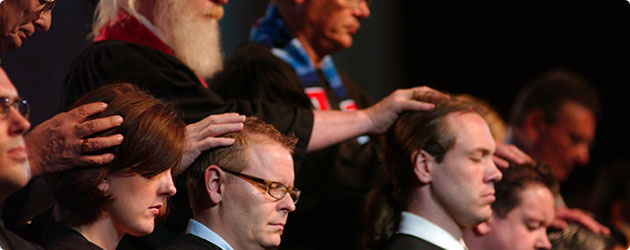
Next Saturday I will be Ordained to Word and Sacrament by the Evangelical Covenant Church. This is an event for which I’ve hoped, worked, prayed and prepared for years. As I’ve shared my news with family and friends, a few have asked why a pastor needs to be ordained and why I am choosing to do so. These are good questions and I want to write my answers here so that you may understand why this is so important to me.

While many pastors talk about ordination as the natural result of spiritual gifting and call, I think that identity – one’s personal story and its intersection with God’s story – is fundamental to the journey toward ordination. So here are some snapshots of my story.

I was raised by two parents who had such genuine love of God that it naturally flowed into our family life. God’s love was clearly explained to me. I was taught about the love and sacrifice of Jesus each week – and I cherished those lessons – but there was a sense in which I didn’t need to be taught. I already knew. As my friend Meg likes to say, I knew in my knower. I knew that God was real, that God loved me and that my life was, and would always be, full of meaning and purpose. At a very young age I felt what I can only call the joy of the Lord. I wouldn’t have said that exactly at age five, but I knew it deep within. I always felt like my joy would someday burst through my chest like rays of sunshine break through clouds.

Things were not always so light for me. From sixth through eighth grade, I was abused by a group of boys at school. I don’t share the details of those experiences with many because some have minimized what happened to me and that is almost as painful as the abuse itself. I’ll simply say that what I experienced those three years had a profound impact on my soul. I constantly received mixed messages about my worth. Filtering for the truth and battling the lies left me emotionally exhausted. Loneliness became a physical force leeching much of the joy out of me. I withdrew socially, read a ton of books and hid my pain from everyone, even my family. But late at night in the quiet of my bedroom I would pour out my fear, my pain and my desperation to God.

God was there with me. He met me in the pages of the Psalms where ancient people cried out against things that should not be. God sat with me in the dirt at the foot of the cross. God heard me and saw me when I felt like no one else did. God was with me every day doling out love and compassion and strength and by this grace, I got through and gradually healed.

A few years ago I worked with a counselor who asked if I had an image that would represent my life for those years. Quickly, I pictured myself surrounded by huge piles of manure taller than any man and so stinky it would make you retch. But here’s the thing I’ve learned about manure – it’s the best fertilizer around. During my years of pain and loneliness, a tremendous root system of compassion was developing in me and God would use that for good.

Flash forward to my junior year of college when I served as a resident assistant, or RA, in my dorm. Being a RA is like being a peer mentor. You plan events and build relationships and try to set a good example for others. There were 24 women on my floor. They were fun, creative, talented women but within two months I discovered profound suffering among them. They smiled through their days and pushed themselves toward academic excellence but behind closed doors they were falling apart. One woman attempted suicide and was hospitalized several times, only to check herself out and return to campus and class as though nothing was wrong. Another woman collapsed in the shower and was too exhausted to get up. Three others had to carry her to her bed but she refused to seek help. I found out that she was starving herself but running many miles every morning. Clinical depression, drug and alcohol abuse, abusive relationships, eating disorders, sexual promiscuity – these women were suffocating from brokenness. Standing in the middle of this cloud of emotional debris, wide-eyed and overwhelmed, God said to me –

Corrie, this is what I have for you. Care for them.

God’s call on my life was like a lightning bolt at midnight. It was suddenly clear; I knew it in my knower. And I panicked. At that point I was still mostly in denial of my past pain, so I thought I was inadequate to the task. Who was I to step in? What did I know about suffering? But God’s call was clear and I knew it would be scariest but best to obey, so I jumped in the muck with both feet. I sat with woman after woman and listened to her story. I offered the simplest of things – a silent, (outwardly) calm presence and words of support. There was no judgment, no trite sayings stretched from scripture, no platitudes, no easy answers. I was very clear about not having many, if any, answers, but I did have a ton of love to offer. That year I tapped into that deep root system of compassion God had grown in me. I also understood that this call to care for the suffering was not temporary; it was God’s call for my entire life, as well as my call to professional ministry.

So I went on to pursue a Master of Divinity, gained mentored ministry experience and have expanded my skills and knowledge on a wide range of pastoral care topics. Over the past 14 years I’ve seen God do some pretty incredible stuff. God brought me to several people at just the right time so I could intervene and prevent suicide. God brings to me despairing people, desperate people, and those who are in so much pain they can’t even think straight. I don’t heal them – I can’t – but for many I am the first person who takes the time to listen well, to see them, to hear their pain, and to help them find a way back from the darkest places. It doesn’t seem to matter what my title or job description is; this is always the substance of my ministry.

So how does this story lead to ordination? Certainly I don’t need to be ordained or even have the title pastor to live out this calling. But here’s what clinches it for me. Here’s why I’ve spent thousands of dollars over the past four years and why I’m flying thousands of miles from Hawaii to Chicago next week to speak the ordination vows – the church is a pain machine.

Churches cause pain in their communities and across the globe through action and inaction. Pastors disappoint their parishioners and parishioners lash out at their pastors. Zealousness for truth or “right” theology has made us rigid and callous and we ostracize the people who so desperately need the good news that Jesus called us to proclaim. Sure, we Christians do a lot of important work in the world – we plant urban gardens, rescue women and children from sexual slavery, develop clean water projects, run soup kitchens and thrift stores – but even as we dig into these good works we aren’t loving or caring for each other well.

The church is busy denying abuse and protecting abusers. Christians are in pain but we aren’t mature or courageous enough to lovingly confront the person or persons who hurt us. We’re fighting theology and worship wars and our main opponents are people within the church, our spiritual sisters and brothers! We’re letting bitterness cement walls between us. And even as we are embroiled in all of this terrible infighting, we scratch our heads and wonder why the church is shrinking in North America, why most denominations are splitting or dying, and why we’re accused of being hypocrites by those outside our walls. When I look around, I see a church that has sacrificed the greatest commandment for the great commission.

The church has a wellness problem. Our attempts at loving neighbor and self are diseased and dysfunctional at best. This is where I hope to intervene as both a person and a pastor. Because of my experiences of pain, because I experienced God’s love and healing through the church and because, though imperfect, the church still expands my love for God, I won’t give up on the church. Instead, I’m choosing to take vows to lead and serve it well.

The church needs all kinds of pastors. I want to be the kind of pastor who tries to right the balance between our expression of the greatest commandment and the great commission. I absolutely want churches and Christians to be biblically literate and intentionally missional in their communities, but first I really, really want them to know God’s love intimately – a love that shatters abuse, overcomes shame, and brings joy to the frayed human spirit. I want churches and Christians to feed and hydrate themselves with this love until it heals and matures us to the point that we can wisely and widely extend love and shalom to our neighbors. I want the church to be known as a healing machine rather than a pain machine. I want the church to be praised as a place for grace seekers and grace givers, a safe place for the suffering to gather and find rest and renewal. I want the church to be a place that values emotional maturity as much as (but preferably more than) it does attendance numbers, small groups programming and pleasing music.

This is what I’m about as a person and it is what I hope for the church as a pastor. Next Saturday, along with 66 other women and men, I will take a series of vows and commit my life to the service and leadership of the church. I don’t know how most pastors feel as they approach their ordination day. I am humbled by the honor and responsibility it is to be called and gifted to lead the church. I feel both inadequate and empowered. After all, I’m just me, a woman with a story. A woman who loves God and cares for the church and thinks the world desperately needs the hope we can give. A woman who knows that I can only be a pastor through the power and guidance of the Holy Spirit.

I’m also a woman who knows that the support of family, friends, churches and even a denomination will be vital to my health and longevity as a pastor. So I ask you to pray for me this week just as you would for a loved one approaching her wedding day. In the days and years to come I will need your affirmation and accountability like I need food and water.

My sincere thanks to each of you who have shepherded me to this day – to El Roi, the God who sees, to my parents and extended family, my mentors, professors, pastors, counselors, confidantes, elders, and especially my soul-sisters – you know who you are.

Life without a Bow

Every life is a story. In the weeks since I announced my new job and my rapidly approaching move to Hawaii countless people have dreamed up epilogues for the next chapter of my life. Many believe this temporary position will somehow become permanent. Others predict that I won’t come back, that another job on the island will line itself up as this one concludes. One man thinks God may be calling me to plant a church on the islands. But the most common epilogue is a romance with a Hawaiian man which will be followed by marriage and cute Hawaiian babies. As I listen to person after person predict what will happen next, I fill with mixed emotions. On one hand, I’ve got a lot of grace; clearly I am well loved and people are excited for me. Meanwhile, the jaded side of me thinks – get real people, this is my life, not a novel!

bow box

Maxine, my creative writing professor in grad school, encouraged us students to resist tying up our pieces in a bow. Using countless examples, she showed us that often the most compelling stories don’t have anything close to fairy tale endings. Yes, great stories always have conflicts that need resolution, but often the conclusions of these stories are messy. Not every tale gets straightened out and wrapped up by the final page. And not every story needs a fairy tale ending – the unexpected return of a hero, rags to riches, marriage and babies – to be great. Sometimes a few tangles and lingering questions make the best ending because real life is messy.

After four years of relentless job searching, the stress of underemployment and an income too small to warrant a budget, the certainty of six months of full-time employment is epilogue enough for me. I’m luxuriating in the freedom from having to look for work for a few months. I get time to reconnect with some dear friends and to make new ones. And let’s be real, the fact that I get to live in Hawaii is a big, shiny bow. God has provided respite. I’m relieved and elated and ready to play in the ocean. I feel satisfied and more whole and hopeful than I have felt in years. So why does everyone else feel compelled to write an epilogue and turn my life into a fairy tale? People are speaking over my life like Simeon prophesied over baby Jesus. But if six months in Hawaii is enough for me, why is it not enough for others? And when I sit back and reflect on this epilogue phenomenon there is one, overarching theme – more. Everyone wants to know more and for me to get more. It’s like there has to be something even better than this.

I’ve learned many valuable lessons over the last four years. To me, the difference between need and want is now as glaring as a glass of water sitting next to a peanut butter milkshake. I know how to stretch money through lean times. Thanks to some early system failures, I’m better able to pace myself emotionally and spiritually in the midst of trial. As I shed some nasty layers off my sense of entitlement, I bulked up with perseverance. Simple nourishment, slowing down, shedding excess: these are the survival skills I learned in the spiritual desert. God wanted me to know that discipleship is about holding on to essentials.

It’s about less, not more.

Trust over certainty.

Waiting rather than self-indulgence.

These are the complexities that make up the Christian life. They are, in and of themselves, both conflict and resolution enough for any story, any life. And here is the most important lesson I’ve learned – the grandest exchange between a human being and God is love expressed through faithfulness.

The most compelling story my life can tell is one of daily faithfulness to God. I’m not talking about big gestures but simple things – apologizing when I speak unkindly to someone I love, extending warmth and welcome to strangers, nurturing friendships, keeping an eye out for others who are struggling, and offering help where I am able.

There has never been a time in my life when God was not faithful to me but his faithfulness has not always meant the provision of things I thought I needed. As days of struggle stretched into weeks, months and years, God’s faithfulness was to abide with me, to console and comfort me, and to give me hope that I could live today and today and today with purpose.

I’ve told many people that my job these last four years has not been to get a job. I discovered that my job is to be faithful. If I can wake up today and invite God in to the rain or shine of my day and make it to evening having loved God, others and myself with any sincerity, then this is a good day, a great story, and a true comedy. This is life without a fairy tale ending or a big crimson bow and it is enough.


Just as the Father has loved me, I have also loved you; abide in my love. John 15:9

GrapeVines-72Res

Lent 2014: The Fiction Fast

I do strange things for Lent. The first time I observed Lent I was 24 and an earnest seminarian. I decided to fast from exaggeration and sarcasm. Yes, you read that correctly. If you know me, you realize the irony – I speak fluent Sarcasm. Hyperbole is part of my charm. My friend Courtney, a Presbyterian minister and a veteran practitioner of Lent, questioned if this would be too much for my first time. I thought and prayed about it but I was resolved. I’d always liked a challenge. Plus I’d recently been convicted by a sermon on Matthew 5:33-37. I was all in.

My first Lent was a sometimes funny, always challenging experiment. I found myself offering the world more pauses, lots of apologies and much shorter stories. All of the new empty moments in my life created space for more introspection. I thought a lot about truth, chaffed against a deep-seated insecurity to be heard, learned about the risks white lies and half-truths pose to my soul and my relationships, and through it all I grew closer to Jesus, which for me, is the whole point.

It’s uncommon for Evangelicals to anchor themselves to the church calendar. I imagine there is a modest group of us who do extra devotional reading between Ash Wednesday and Easter but only a small subset who participate in Lent by fasting. Few of my fellow Evangelicals seem to understand why I observe Lent by fasting. Even my formerly Catholic sister-in-law is curious and confused by my practice. Sometimes I’m not even quite sure why I do this. Maybe it’s the artist in me craving sacred time when I can imaginatively enter into the life of Christ.

Every year I get to choose whether I observe Lent. I don’t have to do this. No one expects me to fast and certainly no one is judging me if I don’t. This is something I do for myself, for freedom. My attitude going in is always a strange blend of eagerness, seriousness and curiosity, with a shot of playfulness. Lent is a truly mystical choice in our get-the-next-best-thing-because-you-can culture. For me it’s 40 days when I willingly sacrifice something of my life, something I love or need, or think I need, because Jesus spent some time in the desert without a survival pack and without attempting to escape what was surely desolate.

The most unleashed thing about a Lenten fast is that there is no clear goal. There’s not a single anticipated outcome that I can project with any certainty. It’s just me creating space with the hope that this sacrifice will make me more attentive to Jesus. I think of it like a sugar detox. Once your body is stripped of artificial and added sugars, the flavors in natural foods begin to zip and zing along your taste buds like Pop Rocks. So I guess I could call Lent my “Quest for the Organic Jesus.”

book-stack

This year I fasted from fiction. Before you roll your eyes and think this lacked bite, know that I read several hours a day – probably the equivalent of time you spend watching TV– often finishing several books a week. Stories are like food to me; they feed my spirit and soak my always-thirsty imagination. I confess – non-fiction puts me to sleep faster than Ambien would crushed in warm milk. I’ll take David Baldacci over C.S. Lewis any day. (I know, I know. Please don’t judge.) Fiction captures me. It takes me on adventures, welcomes me into foreign cultures and families and then confronts me with new questions and challenges. In some ways, reading fiction has better prepared me to be a thoughtful pastor than most theology books and seminary classes ever did. Fiction lets me engage deeply in others’ stories without worrying about myself – what to do with my hands, what my face should conceal or reveal, and when to speak or keep quiet. Each book is someone else’s world, a life unlike my own. The more foreign the story, the more I can learn, particularly how to have compassion for a life so different from my own and how to welcome a stranger. I owe so much of my ability to love the world’s outcasts and the suffering because books have opened my eyes to complexities in the human experience that I didn’t know existed.

So now you see that my fiction fast of 2014 wasn’t just a trifle. It opened up hours of time in each day, some of which I intentionally replaced with gospel reading. Like those magnifying vanity mirrors that allow us to zero in on wrinkles and stray hairs, my fast revealed some major flaws in my spiritual life. For most of the 40 days, my yearning to read fiction dwarfed my yearning to read the Bible. That was intensely humbling, especially as a pastor. Many prayers spun out from there. I also grappled with the fact that too often my reading becomes a buffer from allowing myself to feel, to process my feelings and to pour out my day before God.

Ministry, like life, is not something we pastors can control. Because our work centers around people and their connection to God and to others, what is a smoking ember on Monday can cause a blazing firestorm on Tuesday – all it takes is a little wind. During Lent this year life gusted and ministry blazed. Miscarriages, crumbling marriages, career disappointments, painful perseverance, major life changes: all of this was swirling around me and within me. And each night as I retreated to the quiet of my bedroom, when I would normally pick up a book and dive into a fictional life, the silence and my empty hands stripped away my buffer. I catalogued my cares and fears before God and I cried enough tears to turn any book into slimy paper mache. And every time, I felt better. More connected to God. Heard and loved. Companioned by a Savior who endured much more than 40 days in a desert. A Savior who knew solitude and hunger, and who understood the need to stay connected to the Creator of all good things. Those tears and those prayers cleansed me and prepared me for another day.

This is what I learned by fasting from fiction – even the things we enjoy, things that are not inherently harmful, can become liabilities to our spiritual lives. We can lose ourselves in the things we love. If mismanaged, our hobbies can diminish our vital connection to God. Even healthy habits can become a buffer, an escape, a way to hide from God, ourselves and the world. I suspect that we are all masters at twisting good, happy, fun and fruitful things into barriers, numbing agents and knots. I don’t want to do this anymore. I want to love myself better than this. I want my relationship with God to thrive in and for itself, but also so compassion and mercy can continue to flow in my ministry.

Lent 2014 – I gave up fiction. I wept with Jesus. God restored me. I’m ready for more. More life and more ministry. And yes, more fiction. I’m reading again, but I hope with greater maturity, using fiction as a tool for fun and relaxation and not a buffer against my life, my feelings and my God.

A Holy Week

On Palm Sunday I preached the good news about God’s unexpected salvation – salvation from sin, salvation for all, and salvation from circumstances. I said this –

If God’s power can conquer sin and death, then he can certainly free us from everything that enslaves us. He can remove every roadblock and work miracles through our limitations. But often God doesn’t intercede the way we expect…

Friends, too often we make ourselves prisoners of hope, looking for salvation from circumstances to come in a particular package or follow a particular pattern. As greatly as God loves you, he wants to set you free! But are you coming to God with clenched fists, holding tightly to your expected outcomes? What if God knows that there is something better, something you need more than what you are asking for?

My last blog post was a raw expulsion of feeling. I compared myself to an unraveling sweater. I had reached a breaking point emotionally, spiritually and physically. I could not think of another month of job searching without crying.

What a difference a week makes.

Within days of writing Unraveling Sweater, good news rolled into my life like a 4th of July parade. My father, who was laid off a year ago, received a wonderful job offer. Beginning May 1st he will raise money for a non-profit that serves some of the poorest children in Phoenix. God heard our prayers and came to save.

A few days later I received a job offer of my own. From June thru December I will be serving as a chaplain at the Punahou School in Honolulu, Hawaii. I will lead chapels for students from Kindergarten through 5th grade and offer pastoral care and counseling to students and their families. Though I love spending time with children and prize my role as aunt as much as I do my role as pastor, I’ve never imagined myself working with kids. Clearly God had other ideas. He heard my cries and he came to save.

After 4 years relentlessly pursuing a full-time job, this new opportunity feels like a Jubilee, a real trumpet-blast of liberation. I will have a new challenge to feed my brain and an island getaway free from job-searching to feed my soul. I’m embracing my own lesson. God has given me unexpected salvation, a gift in an unusual package, but I’m welcoming it with joy and anticipation.

The desert has been a significant metaphor for my inner life and experiences the past four years that I’ve lived in Phoenix. It’s not lost on me that I’m moving from the desert to what many people consider paradise on earth. Most people only dream of places like Hawaii and only a privileged few vacation there. I will soon live and work there. I will leave behind the dry, dusty, marrow-sucking heat of the desert for the lush greens, fragrant blooms and warm breezes of a tropical island. I can’t find adequate words to describe my sense of gratitude to God and the renewal of hope that is happening in my spirit.

And in the middle of all of this good news, pain and loss continue to shade my life. A friend is experiencing the miscarriage of her first baby. Another is newly devastated by infidelity. Two others have said their final goodbyes, one to a mother, the other to a sister. A homebound widow begs for a visit and prayers – her roommate returned to a life of addiction and is now hospitalized after attempting suicide. People I love are hurting and so even as I rejoice, I shout – Hosanna! Save, now! Save, I pray!

This has been a holy week. A week of contrasts inhabiting the same moment. I rejoice in my circumstances even as I weep with others. Hope sprouts with new dreams for my future while circumstances crush the spirit of those around me. Joy mixes with sorrow and makes its own kind of liturgy.

As a Christian, Holy Week is the strangest week we live. We do our best to step into time with Jesus, to participate in the iconic moments of his last days. On Sunday we celebrate his arrival as king. He’s come to do his most sacred work, to redeem God’s people and take the throne. We dazzle and sometimes disturb visitors to our churches with waving palm branches, cute children’s plays and shouts of hosanna. By Friday everything has changed. We have lost our joy. We are full of confusion, pain and fear. We turn down the volume and the lights and soak in the fact that our savior has been betrayed, arrested, tortured, humiliated and nailed to a cross. On Saturday we weep. Some give up and walk away. In all of us there is an inner stillness; we’re waiting for something, but we don’t know what. And then it’s Sunday again and we experience the deepest possible joy as Jesus appears before us alive and victorious!

It’s a week full of contrasts that inhabit the same moment. Light and darkness. Life and death. Waiting, seeking and finding. Unprecedented despair followed by unparalleled rejoicing. Holy Week is the pattern of life, at least for now. And it’s only the knowledge that painful things lead to unexpectedly good things, that keeps me living.

The Unraveling Sweater

I can’t recall the last time I’ve been this tired. There was that one time right after my first year of college… I took a redeye from LA to London, spent 8 hours running around the British Museum, then boarded a redeye for Tel Aviv only to report for an 8am class followed by a mandatory walking tour of Jerusalem. That afternoon my friend Sharon fell asleep standing up in a store and almost knocked me down with the display of postcards she took to the floor. As I have never been able to sleep in public, in a moving vehicle, or in any position other than a full recline, I was awake for nearly 48 hours, dragging my body like an ape drags its arms. I remember crawling into my bed that afternoon and being so crazy fatigued that I couldn’t fall asleep. Even after my travel marathon across 11 time zones when I looked and moaned like the undead, I didn’t feel as tired as I do now.

I’m so profoundly tired. I’m tired of trolling the internet for the newest job postings, constantly reworking my resume and writing cover letters everyone requires but, according to experts, nobody reads. I’m tired of job searching in a technology-worshiping society whose efforts in HR convenience have reduced the “right candidate” to pings on a keyword search logarithm. You may as well tattoo a QR code on my wrist and transfer me into a ghetto for all the personhood this honors in me. I’m tired of people basing hiring decisions on quantitative experience. I am a vital, creative, productive being and I am much more than the total of my experiences.

I’m tired of faith-based organizations and churches telling me that while I am very gifted and clearly called to ministry I’m “just not the right fit.” While this may be true in some cases, it certainly cannot be true in every case, so please stop using the Holy Spirit as your scapegoat and have the courage and compassion to give real feedback.

I’m tired of otherwise lovely, well-meaning friends quoting scripture at me or offering simple platitudes about seasons and trials for what is a very complex and taxing situation. I truly thank you for caring enough to ask how I am, but please be prepared for me to be honest. On days when I tear up or say okay (which for me is pretty low), you are not responsible for making me feel better. I don’t need you to try to make sense of what does not make sense. I need your constancy. Show me that you see me. Make me laugh.  Make me a mix CD full of cheesy motivators like Don’t Stop Believing and The Eye of the Tiger so there will be some levity in all this waiting. Give me room to speak my truth and if you don’t know what to say, love me with your silence.

I’m tired of TV shows, comedians, preachers and baby boomers picking on people who live with their parents. Most of us are not lazy, ambitionless moochers who float through the days with their brains in the hemp-hazed clouds of Neverland. I’m tired of news commentators making seven figures who propagate generalizations about “the poor” that may have been true ten years ago. I graduated magna cum laude from a competitive school and flourished in a four-year Masters program. I’m smart, hard-working, ambitious, collaborate well with others. Due to circumstances beyond my control I have spent two of the last four years unemployed or underemployed. I’ve lived on very little income but I pay rent, am debt-free and I tithe. According to the government, I am poor. I may not have a lot of money and most of my socks have holes in them but none of these things define me unless you let them. Poor people are still people full of worth and good ideas. We are visionaries and inventors, industrious people with callings who are juggling multiple jobs and contributing to our communities even as we dream about something better than the hollow American dream. We know what the Bill O’Reillys of the world do not – that if you actually listen to people, if you sit with someone who is not like you and hear their story, you’ll realize that the issues you like to rant about are multi-faceted, incredibly complex and they always impact the human soul. We know that compassion and unhurried face-to-face conversation can motivate greater change than media-hype, elections, taxes and budget cuts.

I’m so tired of all of this. I’m tired of this world and what it values. Of systems and circumstances making me feel less than the vibrant human being that I am. Of being stereotyped and misunderstood and overlooked. Of wearing this droopy, unraveling sweater of perseverance. Of prayers like broken records. Of being my own day-camp director, always trying to fill hours of idleness with something positive and productive.

Yesterday morning as I waited in our church lobby for the first service to end, 16-month-old Sabina came to the nursery gate and lifted her arms to me. (Sabina is a special buddy of mine. I was the first person after her parents to ever hold her. She has a mischievous smile and soft blond hair that flies in a natural mohawk. I love her like she is one of my own.) Unable to resist, I lifted Bina into my arms and kissed her cheek. She immediately burrowed her head into my neck and rested there, totally relaxed. I swayed back and forth to the music coming from the sanctuary. As I sang softly, she hummed along. When she got too heavy, I moved to a nearby rocking chair and continued our gentle motion. She never fell asleep; she simply relaxed in the arms of someone who loves her.

That is what I wish the world was like, but know it will never be. But is it too much to ask for more humanness and compassion?

What Sabina found in my arms is exactly what I need from God. Every night I reflect on my day and pray. In those moments, and in a thousand desperate seconds every week, I am throwing my arms up to God. I need Love to hold me. To let me rest, be still and be quiet. I need God to rock me gently, securing me to him with a full embrace. I need to feel the whisper of I love you on my cheek. I need his song in my ear.

Some days I feel optimistic, like something new is waiting just around the corner. Other days I’m numb, going through the motions with no energy to think beyond the next hour. I wonder if this is what soldiers feel like fighting a long war. Never knowing how and when the war will end. Longing for home but knowing that they might not get there for a long time. Losing sight of what they are fighting for. Their identity preserved by names embroidered on their camouflage and stamped into metal tags hanging from their necks. Their souls weary from what their eyes have seen. Needing vigilance to survive.

My name is Corrie Megan Gustafson. I am a person created, known and deeply loved by God. I don’t have much of what the world values but I have infinite value. I have inner resources that can brighten this dark, calloused world. My story matters and I will do everything I can to keep telling it.

How to Keep Going

4 years. 300 job applications and counting. People often ask me how I keep going despite the fruitless effort, the silence, the rejections, and the pain. Especially the pain. The only way I know how to answer that question is to tell a story from my days in college student development.

RDs in the woods

My boss decided that our training week would be a 5-day backpacking trip deep into the Pennsylvania woods. Though I’m not a fan of camping in general or peeing in the woods in particular, I’m usually open-minded about new experiences. I was dreading this trip because I’d had terrible back pain for three months. I hadn’t been able to get an appointment with my GP or a specialist yet but if I had I would have known that I had a bulging, herniated disc and the last thing I should do is go backpacking. In my ignorance and my special (read, toxic) brand of grin-and-bear-it-to-avoid-inconveniencing-others, I set off on the trip with ten colleagues, a herniated disc and a sixty-pound pack.

The first morning of our trip was relatively easy. We spent several hours hiking down a steep trail. I knew that hours going down meant we would have to go back up. During our lunch break I surveyed the trail ahead. It wasn’t a steep ascent and that’s precisely what worried me. When we walk uphill we naturally shift our body weight forward, putting more pressure on the hips and lower back. Those were the epicenter of my pain. I knew it was going to be a painful afternoon and I knew that no one was going to carry me up that hill. The rope in our packs was too short to create the elaborate pulley system I invented in my head. No helicopter and repelling rescuers would be called in to lift me out of the woods. I had to climb out using my broken body.

in the woods

As we began the hike we naturally broke into three groups. The front group had one guide and our three fittest and most gung-ho staff. I and my friend Spencer were the middle group. Lagging far behind was the second guide and all the stragglers. Realistically, the ascent was nothing like climbing K-2 or Everest – officially, I don’t think Pennsylvania even has mountains – but to me, climbing that hill felt like a Nepalese summit. Think Lord of the Rings trilogy epic. The temperature hovered in the mid-nineties and the woods trapped the swampy air close to my skin. I was dusty, sweat-soaked and wilting like a plucked dandelion but none of that compared to the constant, sizzling pain shooting from my lower back through my hips down to my right calf.

We hiked up for several hours stopping only to hydrate. I could have hydrated myself on tears alone. I moved slowly but steadily up, one foot pushing in front of the other. The pain burned and intensified until the entire trunk of my body was electrified. Being swaddled by the tentacles of a Portuguese man-of-war could be no worse. Tears slid down my cheeks as quickly as the sweat. With every step I fought to push through the pain, I fought to breathe, I fought collapse.

You can do it.

        One more step.

                Just keep going.

                        You’re getting closer.

                                Oh God!

This was the soundtrack looping in my head. I whimpered and gasped and cried my way up that hill.

logging trail

By that point in my life, I’d traveled widely and seen diverse land and seascapes. I’d viewed such beautiful terrain that it took my breath away. Woodlands are by far my favorite landscapes on earth but the pain of this ascent made me blind to every beauty. I stared down at the dirt trail three feet ahead of my shoes. I looked up once. It was a mistake. I saw nothing but the trail continuing up and up and up into the trees ahead. There was no end, no leveling, no horizon, only more dirt and trees. Looking for the end of the trail threatened to overcome my already frayed endurance, so I refocused on the ground just a few steps in front of me. I realized that every three feet was a victory I couldn’t afford not to celebrate.

During hydration stops I kept my pack on, avoided eye-contact and said nothing. I tuned out my colleagues with their happy chatter and looked down the trail we had climbed. From this vantage point, the long-stretching descent was dizzying. Though I had a sense of accomplishment in how far I’d climbed, I knew there was much more of this beast to overcome.

We’d started climbing again and split into our three groups, Spencer staying with me in the middle of the pack. I don’t think I would have survived that climb without a major breakdown if it weren’t for Spencer. He was the steadfast Samwise Gamgee to my burdened and broken Frodo Baggins. He didn’t carry my pack, pat me on the back, offer me tissues or yell overly enthusiastic cheers. He offered a few soft encouragements and a quiet, constant presence.

Spencer, my Samwise

Spencer, my Samwise

I survived that terrible climb. As the late afternoon sun made the tree branches glow, the incline leveled off and we soon reached camp. Spencer helped me remove my pack and I made a pretense of heading off to relieve myself. What I really did was drape my body over the branches of a sapling and weep in exhausted relief.

The long ascent in the Pennsylvania woods has become a powerful metaphor for me and a tool in my present struggle. I have no idea when my employment quest will end but I keep searching, applying and hoping. I’ve learned that perseverance is not easy. In fact, it’s the most difficult thing I’ve ever done. Every day for the past four years has been like climbing a really long hill with a sixty-pound pack, a herniated disc and no break on the horizon. How do I keep going? I keep my eyes trained on the ground just beyond my feet. I set and then focus on reaching tangible goals, knowing that they are markers stacking up to my destination. Occasionally I look back and notice how far I’ve climbed with God’s help. I celebrate every victory along the way, no matter how small, even if it is just three steps. I pause to rest and set down my burden so I can breathe deeply. Through prayer, lament, fellowship and play, I hydrate my soul as well as I would my body.

To a friend, I recently described these years as my long obedience. Many have suggested that I choose another career. I imagine that behind my back some question my choices and discernment because nothing has come of all my seeking. Those people forget that I am following the call of God in ministry, a call affirmed by so many people – wise and respected, rational people, even some who don’t share my faith. We often forget that obedience can be painful, just as perseverance is. Being obedient means each day I choose to journey through the pain.

Some days my attitude is positive and hopeful; other days it is abysmal, a real storm-cloud of pessimism, fear and desperation. Picture Thor as a toddler, mid-tantrum, waving around his magic hammer. That’s a dangerous scenario. Immaturity combined with negative emotions can obliterate any path of perseverance. If I don’t learn how to manage the raw power of my emotions I will hurt myself and others. That is why it is so important to rest, to regroup, and to celebrate where I can along the way. And this, I think, is one of the secret keys to persevering – find a way to convert negative emotions into fuel that will keep you moving forward.

biodesel car

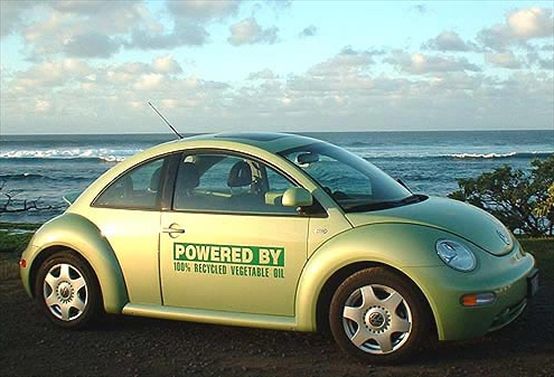
Some of my college students collected dirty fast-food cooking oil and used it to fuel their cars. I don’t understand the science of how they did it, but the principle is genius. Take what you would normally discard and use it for your benefit. As I persevere, when I’m angry or frustrated, I use it to energize my next footstep. I stomp my feet down on the ground again and again until I’ve conquered another fifty feet. I have to find ways to dig in or I’ll disintegrate.

Sanity depends on identifying your Samwise Gamgee and keeping him or her close. Unfortunately, in our times of greatest pain the people who love us most may not love us best. When we are in pain, our loved ones will be desperate to help us and make sense of this mess with us. Sometimes their expressions of love and concern will be insensitive, overbearing, patronizing and unhelpful. I can either respond negatively (push them away, rant at them, punish them for trying to show their love) or learn how to glide over their insensitivity like I would ride a roughly cresting wave. If someone consistently annoys or hurts me, I prayerfully and courageously find a way to tell them how best to support me in this time.

I didn’t give Spencer too much credit when I said I wouldn’t have survived the climb without him. His quiet presence eased my obsessive need to see the horizon. Knowing we are not alone in our pain has a profound impact. We can endure when there is a we. When you discover along the way someone who you can tolerate, who can tolerate you on good days and foul-weather days, keep them close.  

One of my favorite scenes in film is from Lord of the Rings: Return of the King. In one of the final scenes Frodo wakes up after his journey to Mt. Doom, now safe and healing at Rivendell. One by one his compatriots enter the room and he joyfully celebrates with each their survival and their victory. But when Sam walks through the door, the look in Frodo’s eyes changes. Here is the one who walked into danger to support his friend. Here is the one who risked his life when he didn’t have to. Here is the one who loved Frodo when Frodo was snarly, despondent and almost possessed. Sam was the one who carried Frodo up the lava-spewing mountain when the burden of the ring was too great. When he sees Sam, Frodo’s joy is hued with a profound, soul-soaking gratitude that defies every description I attempt to give it. Watch to the end of this clip to see what I mean.

I’ve felt that these past years, an abiding thankfulness for the gentle and steadfast presence of so many friends. Like I said, we can endure when there is a we. That’s how I keep going.

Scripture Most Evangelicals Don’t Believe

“The board could not reach unity about hiring a single woman to do family ministries.” This sentence was the culmination of a five month interview process with a church. The main components of the position I applied for were adult spiritual formation and pastoral care to families. The search team spoke at length with six of my references to hear stories of my ministry and they grilled me with tough questions for hours. They unanimously recommended me to their board as the candidate called to this position. And then, in a completely unexpected turn of events (for the search team, pastor and me), the elder board rejected their recommendation. The pastor had the unfortunate burden of calling to tell me why I would not be called to serve their church. He told me that, for the elders, it wasn’t so much that I am a woman as it was the fact that I am single.

None of the board members met or interviewed me. Their decision was not based on the Lord’s presence in my life, the fruit of my ministry, my character or my professional qualifications, though I am sure the search team and the pastor gave witness to all of these. They based their decision, it seems, on the belief that there is an incompatibility between the role of pastor and singleness.

This decision reveals an implicit bias widely ingrained in the evangelical community – that being married is best. I believe that because Paul uses a marriage metaphor in an attempt to describe the depth of Christ’s love for the church (see Ephesians 5:21-33; 2 Corinthians 11:1-3), and because as we interpret and apply scripture we have not understood that there are limits to metaphor, we evangelicals have allowed the Christ/Church marriage metaphor to transform our understanding of human marriage into the quintessential symbol of relational health, wholeness and joy.

The belief in the greatness of marriage has so saturated evangelical culture that our beliefs about singleness are shaped almost entirely by default. Because we see marriage as such a beautiful and whole expression of love, singleness has becomes a less-than, not-to-be-envied, even suspect, way of living. This bias reveals itself every time I visit a new church or meet a new group of believers who, when they discover that I am single, start telling me about their unmarried friends, brothers, cousins and coworkers like eager sales associates for eHarmony. It waves its banner annually when our pastors preach a multi-week sermon series promoting healthy marriage while offering (maybe) one sermon or a two-minute aside about living faithfully in singleness. (This trend is even more problematic when we consider the reality that, according to the 2012 census, singles make up 47% of the adult population in the United States.) We see the slimy underbelly of the evangelical bias toward marriage when believers speculate together about the sexual orientation of friends and family who remain single in their late twenties and thirties and beyond. (Is there a more unchristian practice than this?) And it is our unchecked, unbalanced bias toward marriage that leads even our elders to believe that single people and childless people cannot empathize with and minister to couples and parents.

I can’t help but notice that all of these beliefs and assumptions about marriage and singleness exist in riotous tension with another of Paul’s letters. In my opinion, 1 Corinthians 7 is perhaps the single-most ignored, if not disbelieved, passage of scripture by evangelicals today. I encourage you to grab your Bible and take an hour to listen to, pray through and study this passage, but for the sake of our current topic, I’ll quote only highlights:

7I wish that all of you were as I am. But each of you has your own gift from God; one has this gift, another has that. 8Now to the unmarried and the widows I say: It is good for them to stay unmarried, as I do…17Nevertheless, each person should live as a believer in whatever situation the Lord has assigned to them, just as God has called them…25Now about virgins: I have no command from the Lord, but I give a judgment as one who by the Lord’s mercy is trustworthy. 26Because of the present crisis, I think that it is good for a man to remain as he is. 27Are you pledged to a woman? Do not seek to be released. Are you free from such a commitment? Do not look for a wife. 28But if you do marry, you have not sinned; and if a virgin marries, she has not sinned. But those who marry will face many troubles in this life, and I want to spare you this.32I would like you to be free from concern. An unmarried man is concerned about the Lord’s affairs—how he can please the Lord. 33But a married man is concerned about the affairs of this world—how he can please his wife— 34and his interests are divided. An unmarried woman or virgin is concerned about the Lord’s affairs: Her aim is to be devoted to the Lord in both body and spirit. But a married woman is concerned about the affairs of this world—how she can please her husband. 35I am saying this for your own good, not to restrict you, but that you may live in a right way in undivided devotion to the Lord.39A woman is bound to her husband as long as he lives. But if her husband dies, she is free to marry anyone she wishes, but he must belong to the Lord. 40In my judgment, she is happier if she stays as she is—and I think that I too have the Spirit of God.

Paul talks about singleness and marriage in a balanced way, not denigrating either lifestyle, calling them both gifts from God. How many evangelicals do you know, married or single, who really view singleness as a gift?

It doesn’t take an exegetical contortionist to pick up on Paul’s inclination toward singleness. He actually recommends that believers remain unmarried because it allows them to focus solely on pleasing the Lord. He says, “it is good” or kalos to remain unmarried. Thayer’s Greek Lexicon says that kalos was a word “applied by the Greeks to everything so distinguished in form, excellence, goodness, usefulness, as to be pleasing; hence [to be kalos was to be] beautiful, excellent, eminent, choice, surpassing, precious…”

What I love so much about this passage is that it reminds us that to marry or to remain single is a choice, and to choose to remain single is a beautiful, admirable thing. By Paul’s testimony, those of us who are unmarried have the advantage of space within our hearts and lives to devote ourselves first and foremost to Christ. The word devoted (verse 34) can be literally translated “sitting constantly by.” What a beautiful image, that being single allows us to sit constantly by Jesus. What a wonderful, perhaps even ideal, context in which to minister to the church.

I know many naysayers would ask me how I reconcile this with Paul’s teaching about overseers in 1 Timothy 3 –“the overseer is to be above reproach, faithful to his wife…he must manage his own family well and see that his children obey him…” People often read this passage as a job description for pastors and consequently believe that overseers must be men who are married and have children. I believe that Paul writes descriptively from within the culture and context of the early church, not to indicate that he sees gender, marital status and parenthood as prescribed conditions every potential overseer must meet. It seems that the main point of Paul’s instructions to Timothy is that overseers must be people of integrity and proven character. If marital status and parenthood were ‘must haves’ in leading the church, then Paul himself would not have been respected by the early church as the wise apostle and advisor that he was.

A woman recently asked me to be her mentor. She is older than I am, married and has a child. Her husband asked her why she would approach me when I am not married. She told him that she chose me because I am wise. She believes I can help her unpack the message of scripture and help her weave it into her daily life. With a conscious dependence on the Holy Spirit, I can and will.

Every day I minister to men, to married people and to parents. Our congregants respect me and seek me out for counsel not because I share the same life experiences they do (in most cases I don’t); they seek me out because they have seen consistent evidence of my character, they know my devotion to God and his Word, and they have seen me live what I preach. Bottom line – they trust me – not because of my age, gender, marital status or how many child I have or have not birthed, but because I am a faithful servant of our God.

Singleness is a good gift from God. It is a way of life that should be respected in the church, if nowhere else. It could be approached as a significant life choice to be prayerfully discerned by young adults and by those following a call to ministry. How many evangelicals believe this? How many single Christians believe this? Unfortunately, we seem to have shaped our regard for marriage and singleness based on cultural influences and our personal experiences rather than the teaching of scripture.

It’s Valentine’s Day, church. I want you to hear and believe this message, as I do: there is nothing deficient in me or my ministry because I am single. With God’s strength, mercy and love, I can do all things. I cheerfully celebrate Valentines Day and every day because I am fearfully and wonderfully made by a God whose love for me is whole and fulfilling. I wholeheartedly support and work for healthy marriages and families. Would you do the same for me in my singleness?

Matryoshka Syndrome

Matroyshka-Semenov-Dolls

As a child I played for hours with a matryoshka doll. If you are not familiar with them, matryoshkas are wooden dolls first fashioned in 19th century Russia. Their smoothed wood surfaces are painted with vibrant colors and intricate designs. My doll had a crimson and rose design exactly like the picture above. My childhood delight in the matryoshka was not just about its artistic beauty; the doll was like a treasure box with ten more treasure boxes hidden inside. Each matryoshka has a seam and when I opened mine up, nestled inside was a smaller but equally beautiful doll. I’d lift out the next figure, take a few moments to study her design and then open that one to find another, and another, and another until I got to a baby matryoshka no bigger than a quarter. I’d take them all out and line them up in a row, full-grown to infant, studying the changes in their shiny coats. I imagined them a family of sisters posed for a portrait or perhaps images of a single girl captured at each stage of her development. There was something magical in the metamorphosis before me — the infant whole, her design simple, with every doll down the line growing bigger, her planes and slopes an ever-expanding canvas for the artist’s brush.

Twenty-some years later, the matryoshka is gone from my parents’ home but I thought of it today as I shared coffee with my friend Natalie. Natalie and I were catching up for the first time in several months and as such conversations go, we started off with general updates about our lives but were soon soul-deep in a conversation about the complex decisions and struggles we are facing and the spiritual weight of it all. We discovered ourselves asking the same profound question — what is stopping me from doing the thing that is good for me?

Natalie and I are intelligent women. We can easily identify what we want, what we need and how we can get to where we want or need to be. We agreed that the sticking point is often that we don’t do, that we don’t follow through. We wonder if that’s because we don’t have the courage or the energy to tackle what seem like a thousand matryoshka-like steps to our goals.

I’ve always had an expressive personality. When I was a little girl and I felt something (anything), I felt it strongly. I expressed my feelings in a spirit of freedom and exuberance, my volume and tone matching the fervor of my feelings. But as I grew from a girl to a teen, I received so many messages that said my feelings were too strong and that it was not okay to express my feelings strongly. Ultimately, the message I heard was that my feelings didn’t matter that much and therefore I didn’t matter that much. Inundated with these messages, I began to filter and dilute my expressions and to hold my ‘unacceptable’ feelings within me. At first it was like swallowing a zoo, but the longer I kept my cage closed, the more my feelings settled down. Eventually they diminished from roars to squeaks and moans dull enough to be mistaken for wind passing through branches.

From girlhood my life seemed to move with warp speed and I was suddenly in my mid-twenties in a counseling session talking about the abuse I was experiencing and about body image and some self-destructive behaviors that I felt powerless to overcome. As a competent professional and a seminary graduate, I believed that counseling was an investment in my health. As Corrie sitting in a room with a counselor, my choice felt way more scary than healthy because it meant reopening the zoo and letting all the animals out. I fought the stupid cultural stigma of needing counseling. Those old voices that told me I was making too much of my struggles rose up and taunted me like ghouls. I was taking steps toward a healthier me but I felt weaker and phony. Most days I strode through my work and relationships tall and confident. While counseling affirmed the strengths I had, it also forced me to see and feel the things that I had kept hidden within me for so long. Like when you walk across a sturdy lawn and your ankle rolls in a soft patch, there were now moments in each day when I stumbled upon and sunk into my vulnerabilities. After a few months of sessions it seemed like my life was just one big soft patch and my soul felt swampy — but it wasn’t all bad. It was also healing to have someone listen to my feelings and not minimize what they found. Wonder of wonders, my counselor thought that my emotions were natural, healthy even. With her it was acceptable to have a stale, zoo-full of feelings and it was safe to let them out.

Today, over a creamy chai latte I shared some of my story with Natalie. I reflected on how much I’ve healed and how I continue to grow from the seeds of that counseling. I’ve learned that there is a very healthy medium between suppressing my feelings and letting them control me. Sometimes it still seems a dangerous and scary thing to acknowledge my feelings to others, especially when I need to tell someone they’ve hurt me, but I need to tell them. There is a high cost to denying, diminishing and suppressing my feelings; when I do that, I drown myself in emotional debt.

A few weeks ago I received a series of emails from a man who was disappointed and frustrated by my actions. Knowing that few resolutions happen over email, I called him to ask for his perspective and to share my own. We cleared up some misconceptions and I accepted responsibility as I needed to. The teenage me would have never picked up the phone. The twenty-something me would have called but stuck to the surface and the facts and quickly ended the conversation. But the woman I am today made the call and took another very important step. Toward the end of our conversation, I kindly said that the language and tone of his emails made me feel belittled and patronized. I told him that my relationship with him is important to me but that I felt his method of giving me feedback was hurtful and therefore difficult to receive. I asked him to please call me or come to me in person the next time he has an issue with me. He had very strong response to my feedback but that’s okay. One of the most important things I have learned over the last decade is that in conflict you can’t control someone’s response, you can only control what and how you communicate. Though confrontation and working toward resolution is messy and difficult and not always successful, it is very important that we try our best.

Jesus taught that greatest commandment is to love the Lord with all of your heart, soul and mind. He said that the second greatest commandment is to love your neighbor as yourself. I don’t know how you are wired, but for me it’s very easy to love God. As an individual and as a pastor, my passion is to love and care for others. It’s the “as yourself” part where Jesus and I wrestle. I’ve never been great at loving myself…I guess I just heard too many messages that told me that my feelings didn’t matter and so it wasn’t worth speaking up. But I am trying to love myself better and in many ways I’m succeeding. Being honest with that man and respectfully acknowledging that his words and methods hurt me was not just about me loving my neighbor, it was also a significant expression of me loving myself!

A few years ago one of my mentors asked me if I felt that I had a voice. That stunned me; it was a new question with a devastating answer. In an instant I said no and in the next instant I was saturated with grief over all of the times that I stewed and suffered in silence. As a girl, when my feelings were rejected and I began to stuff them inside — in that abyss of powerlessness — I surrendered my voice. As Natalie and I were talking today, the image of the matryoshka doll popped into my head. For so many years I lived out of the smallest version of myself. I was like a matryoshka frozen in the infant stages; I spoke only with a diminished or diminutive voice. The reality is that I am a woman worth so much, capable of so much more!

Semenov_Traditional_Nesting_Doll_1

How many of us live as a shadow of our true selves? How many of us lead with a shaky whisper when our voices should ring with confidence? Learning to love ourselves makes all the difference. It’s no surprise to me that Katie Perry’s song Roar and Sara Bareilles’ Brave have become huge hits, especially with young girls. It seems like an epidemic, so many girls receive messages that they are worth less than others, especially boys, and that their feelings are not an important or acceptable part of the human experience. Maturity teaches us that these are lies. We are full of worth. Emotions are an important, God-created part of our being. This is so fundamentally true that even women who don’t know or love God are writing songs to encourage girls to find their voices and speak up.

“Nothing’s gonna hurt you the way that words do
when they settle ‘neath your skin
kept on the inside and no sunlight
sometimes a shadow wins
but I wonder what would happen if you
say what you want to say
and let the words fall out
honestly, I want to see you be brave”  (Sara Bareilles)

“I used to bite my tongue and hold my breath
scared to rock the boat and make a mess
so I sat quietly, agreed politely…
I’ve got the eye of a tiger, a fighter, dancing through the fire
cause I am a champion and you’re gonna hear me ROAR” (Katie Perry)

Nesting-Dolls-dolls-2282268-353-333It takes a lot of love to heal from the toxic messages we hear. It takes time to rediscover your voice and courage to use it. Maturity born of mistakes teaches us to live large and use our voices without harming our neighbors. This is difficult work, but it’s so important to living an abundant life that it’s worth any cost.

To my mom-friends

By the time a woman reaches my age, most of her friends are moms. I’ve been thinking of my mom-friends a lot lately, probably because it was Christmas which is about the birth of a baby to a family and you were posting a billion pictures of your family and snow and your family in snow. It makes me miss you because, let’s face it, we live way too far apart. I wish I lived closer so I could cuddle with your baby or help the older ones with those crafts that always make your kitchen table look like a Kandinsky painting. I even miss risking permanent pain and dislocation on those days when I’ve not had enough coffee and agree to wrestle with your boys. But as much as I love and miss your children, I dearly miss you.

Your kids have changed the fabric of our friendship, but let me say loud and clear that I don’t wish things were different. These little people you’ve made give me a lot of joy. Though I sometimes miss our spontaneous meetings for coffee or one-on-one time with unbridled and uninterrupted conversations where I don’t have to spell words like C-O-O-K-I-E and S-T-U-P-I-D, or window shopping sans stroller, backpack, sippy cups and multiple potty breaks – I promise – it’s only an occasional pang of sadness. I realize that all change, even good change, comes with some loss.

These people named Sera, Chase, Landon, Willa and Seth, they burst into your lives and our friendship with all of the boom and sparkle of fourth of July fireworks. I knew then that everything would be different and it is, but what we have now is so, so good.

Because you are a mom, I have learned to love you in new ways. I get to watch you discover new depths of yourself as you figure out how to survive years of sleep deprivation and how to pick up the pieces after the great stomach flu of 2010 that knocked you all down like a wave rushing over a sand castle. With grit and wisdom you circle, plot and conquer the complex problems that are your daily life. Sure, you make mistakes as a parent but I admire you even more because you reflect and learn from them. I observe this like a fan at a sporting event. I’ve set my fraying vinyl lawn chair along the green field of your life and I’m whooping and fist-pumping the air, yelling, “You go girl!”

Do you remember that blog post or article that bounced around Facebook a few years ago – it was a mom’s response to a single, childless friend who didn’t understand what the mom did all day? The non-mom clearly resented the time the children took away from her friendships. I believe that non-mom’s perspective is either a result of blindness or she is using cluelessness to cover over her pain. I think the subtext of that whole exchange is the non-mom missing her mom-friend. And it seems to me that the sparking point of her pain is her love.

Let me be a non-mom who puts it out there – sometimes I’m jealous. Mostly, I’m jealous of your time. Because you are a mom and that affects our friendship, there is a selfish part of me that wants to hoard your time, love and attention like I do gourmet caramel. Those months you spent nesting and setting up a nursery, when I helped you paint and shop and organize all the pastel and polka dot loot from your showers, I was also grieving the great impending change in our relationship. But don’t worry, this jealously is usually fleeting and it is always outweighed by happiness for you. The mature me knows that you are so precious that I would be a fool not to share you with others. No one should miss out on a love like yours.

While I’m being open I’ll also admit that I envy you. Not all women love kids and want to be mothers, but I do. Those precious weeks you spent nesting and then cradling and nurturing your infants were times I was doing my best to swallow past the super-sized golf ball in my throat. Even though you let me cradle your babies and you call me Aunt Coco and have me over for family movie night and show me in a hundred ways that you love me as much as ever, being a part of your motherhood is a reminder that I may not experience my own.

Our lives are constantly being shaped and reshaped, sometimes by circumstances beyond our control and sometimes by our own choices. We will never stop adapting and changing to new realities. I may have children one day and I’ll be bemoaning the teenage years while most of my mom-friends will be glorying in the freedom of an empty nest. We may never again be in the same place as women or as moms, but we will always have the opportunity to nurture each other. And when I think of my friendships fifteen years from now, I realize I have a significant choice right now.

This friendship between us is a beautiful thing and I am thankful to God that I have you in my life. Despite my moments of jealousy, envy and grief, because of you I also have profound joy and appreciation. And because you are a mom our friendship is stronger. We’ve had to figure out how to carry on this important relationship amid all of the necessities that make up your life as a mom and my life as a non-mom. When it comes down to it, maintaining our relationship is a choice for both of us. I deeply value your presence in my life. I can never say that loud or often enough. I understand that you have these little people who literally need you to sleep, eat, dress and learn about the basics of life like how and why we wash our hands and why love is the most powerful force on earth. Your motherhood is a significant thing and I hope that I can find ways to build you up. I want the friendship that I offer you to be one of the essential nutrients that makes you a better you, and a better mom.

It’s a new year and you are already well on your way to learning a hundred new things about life because you are a mom. I won’t presume that I have much to teach you about motherhood, but I do have something to say that as a friend I hope you can hear and absorb.

It seems that everywhere I go – no matter what state or restaurant, blog or Facebook page I visit – moms everywhere are being critical of themselves. You have a baby growing in your womb pushing out the wall of your stomach because there is nowhere else to grow and you call yourself fat. Your body is a different shape after bearing, birthing and feeding three children and you are constantly berating yourself for not fitting into you pre-pregnancy jeans. Your house is full of toys to stimulate fun and imagination and learning but what you see is a shameful mess you have to hide from visitors. Your child misbehaves in the nursery or at school and somehow it is a cosmic judgment on your skill as a parent rather than a symptom of the emotional and spiritual journey of your child. You are balancing motherhood and marriage and work outside the home and you reflect on all of the ways you feel like you are failing without building a list of all the ways you are flourishing. I am mystified and very sad that you cannot see and dwell on all the good that you are and all of the good that you offer your children, spouse, workplace and relationships.

I don’t know the cause of all of this self-judgment and even if I knew the cause it’s probably too big for me to dismantle alone. But I have a significant gift to offer that I think could help battle this terrible beast you face every day.

Picture me standing right in front of you close enough to pull you in for a hug. I can easily see the shadows you’ve tried to hide under concealer and the hints of gray shining in your roots. I see your tiredness, your sense of failure, your splintering last nerve, your fear of losing yourself, your desire for a break, your secrets and your pain. I see all that and you know what I think?

This woman is my friend and I’m so lucky. I love her. She’s brave and funny and tough. She makes me happy even when we just sit together in silence. She is such a part of me that all she has to do is twitch an eyebrow or quirk the right side of her mouth and she’s read me a chapter of her thoughts. I wouldn’t be the person I am today without baking a thousand cookies with her or sharing a bottle of red in a Roman piazza with her or without her shoulder to sop up my tears. And I probably wouldn’t like the person I am today without her affirmation, her laughter and her courage to call me on my crap.

To me, dear friend you are lovely. Your motherhood, as difficult and tiring as you may find it, expands my ability to love you. Are you perfect? Are you a ‘cool’ mom, the best mom on the block? When was the last time you washed your kitchen floor? How often do you give in and give them one more C-O-O-K-I-E just to stop the whining? Did you remember my birthday? I don’t care about the answer to any of these questions. I care about you seeing yourself and loving yourself…like I see and love you – and let’s kick it up ten million notches to the Nth degree – like God sees and loves you.

The complexity of your life is stretching and transforming you into a beauty that no pageant or plastic surgery, no Disney cartoonist, Insanity workout or one hundred-dollar dye job could ever produce! I like you because of who you are, not because of what you or your house look like or could look like. I wish that you felt the same.

This is my prayer for my mom-friends, that you would see yourself as you are and be deeply satisfied.

I think if you do this, then the answers to those questions I asked above would fade into oblivion and the questions themselves would cease to have power over you, because love is the most powerful force on earth.

I hope you realize that the word friend is as significant as the word mom. Our lives are very different, but that just gives us more ways and opportunities to love. We have so much to offer each other – laughter and listening and accountability – and hundreds of memories yet to frame and hang on our walls, even if we live thousands of miles apart. I hope that we continue making room in our lives and choosing to nurture each other for decades to come.

You are awesome and I love you. I’m blessed to be your friend.

A New Year’s Walk

Today we begin another year, 2014. I started my day with a walk in the January sunshine, still reflecting on the Advent and Christmas realities — they have captivated me anew. Things are in bloom here in Arizona, just as there are spaces opening within me, ready to be filled with new life and wonder. The sky is a brilliant blue. The sun is warm. A soft breeze brushes my skin and fills my nose with fragrances of spring. There is too much beauty and bloom here to capture with my amateur photography skills, but every corner seems to have something to proclaim, so I went back for my camera. As I uploaded the images I caught, I read through the Gospel of Luke again and read the story in the vibrant blooming life all around me. Would you take this walk with me?

Do not be afraid, Zechariah; your prayer has been heard.

HEARD

HEARD

Zechariah’s wife became pregnant and for five months remained in seclusion. “The Lord has done this for me,” she said. “In these days he has shown his favor and taken away my disgrace among the people.”

favor

FAVOR

Greetings you who are highly favored! The Lord is with you…The Holy Spirit will come upon you, and the power of the Most High will overshadow you.

OVERSHADOW

OVERSHADOW

Even Elizabeth your relative is going to have a child in her old age, and she who was said to be barren is in her sixth month. For nothing is impossible with God.

POSSIBLE

POSSIBLE

Blessed are you among women, and blessed is the child you will bear…Blessed is she who has believed that what the Lord has said to her will be accomplished.

BLESSED

BLESSED

His mercy extends to those who fear him from generation to generation. He has filled the hungry with good things…

FILLED

FILLED

Praise be to the Lord, the God of Israel, because he has come and redeemed his people…to show mercy…to rescue us…to enable us to serve him without fear.

FEARLESS

FEARLESS

Because of the tender mercy of our God, by which the rising sun will come to us from heaven to shine on those living in darkness and in the shadow of death, to guide our feet into the path of peace.

SHINE

SHINE

Sovereign Lord, as you have promised, you now dismiss your servant in peace. For my eyes have seen your salvation, which you have prepared in the sight of all people…This child is destined to cause the falling and rising of many in Israel, and to be a sign that will be spoken against, so that the thoughts of many hearts will be revealed.

RISING

RISING

There was also a prophetess Anna…She was very old…eighty-four. She never left the temple but worshiped night and day, fasting and praying. Coming up to Mary and Joseph, she gave thanks to God and spoke about the child to all who were looking forward to the redemption of Jerusalem.

LOOKING FORWARD

LOOKING FORWARD

And the child grew and became strong; he was filled with wisdom and the grace of God was upon him.

GRACE

GRACE

May the Lord bless you with the faith to see his story living in and around you each day. Happy New Year!