We cannot long…

“We cannot long for something that is not intimately close to us. Thirst is more than absence of water. It is not experienced by stones, but only by living beings that depend on water. Who knows more about living water, the person who opens the water tap daily without much thinking, or the thirst tortured traveler in the desert in search of a spring?”

Father Joseph Neuner, friend and confessor of Mother Theresa

Leaning Into Our Pain

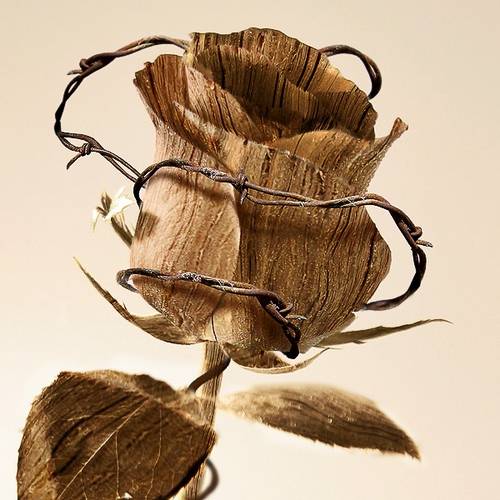
A man was pruning his prize roses when a thorn pierced the palm of his hand.  Though the thorn drew his blood, he saw no debris in the wound, so after a quick wash he went on with his gardening.

The next day the man noticed that the cut was red and sore.  Two days later the area was swollen, raw and painful.  He washed his palm with soap and covered it up with a bandage, hoping that the infection would go away.  What the man didn’t know was that a small piece of thorn was imbedded in his palm.  Bacterium from the thorn was causing the wound to fester.  Despite his growing pain and the fiery inflammation, the man kept with his regimen of washing, applying topical ointment and covering the wound with a bandage.  A week later, with the infection climbing up his arm and the pain so great he could no longer use his hand, the man went to the emergency room.  To his shock, the doctor informed him that she had to cut open his palm, explore it for debris, irrigate and clean out the wound.  She told him the procedure would be painful.

The man asked, “Can’t you just give me antibiotics?”

“I’m sorry sir,” the doctor replied, “that would only relieve your symptoms for a time.  If we don’t open you up and clean out the wound, the infection will continue and likely get worse.”  The man hated needles and was wary of additional pain so he asked about alternative treatments.

The doctor looked sympathetically at him and calmly said, “Sir, I understand your concerns.  But you can’t just clean the surface or treat the symptoms and expect to get better.  At this point our only option is to open the wound and clean it from the inside out.”

The man looked distrustfully at the doctor.  The doctor sighed and said, “Sometimes the only way to heal is by experiencing additional pain.  Sometimes I have to hurt to heal.”

_________________

If this story was about our souls rather than a thorn in a palm, how many of us could identify with this man?

How many of us have heavy stone tumors lodged deep in our guts?

How many of us are gristled with scar tissue from painful experiences or relationships that we’ve never taken the time process?

How many of us minimize our injuries?  (i.e – covering up a festering wound with a bandage)

How many of us scrub the surface of our lives or treat our symptoms but ignore the underlying problems?

How many of us are nursing wounds, old or fresh, which are poisoning us?

My guess is that there is a simple answer to these questions: all of us have these wounds and no matter how self-aware or intelligent we are, each of us has (at some point) responded with poor self-care.  We buck up and patch ourselves with ineffective home remedies. We do this because we are human, and as such are imperfect and prone to accidents and missteps with ourselves and others.

Here is some difficult wisdom passed down from the ancients across all religions and cultures: to heal we must lean into our pain. 

Have you reached a point where you sense that the only way to heal is to acknowledge your woundedness and courageously journey through the pain?

Dr. Cecily Saunders, the mother of the modern hospice movement, pushed the medical community toward what she called Total Pain Management.  In a time when medicine only treated the physical pain and symptoms of the dying, Dr. Saunders encouraged caregivers to attend to the patients’ emotional and spiritual suffering as well.  By asking the question, “How are you within?” nurses discovered that patients’ pain diminished or disappeared because they talked about their soul pain and they felt their distress was legitimized.

Some pain is obvious, visible, on the surface.  In these cases we know someone is in pain because it alters their posture, we see them grimace or they have a cast or a crutch.  That pain is easier to attend to, easier to ask about and consequently, people in obvious pain are often well-cared for by others.

But what about those of us who have hidden pain like spiritual and emotional suffering?  Who can see that we are hurting?  Who will know that we need help unless we acknowledge our pain?  Many who suffer with soul pain will delay seeking help and healing until the pain is so unbearable that they fall to their knees.

Must we let it go this far?  I believe not.  We have opportunities before us.

If you are suffering with some secret pain or ignoring an emotional/spiritual wound, I encourage you to take a few steps:

  1. Acknowledge you are in pain – name your pain and its source (I like to stand in front of a mirror and say it out loud, then write it down and reflect)
  2. Consider sharing this pain with a trusted and wise friend or mentor or seek professional counseling
  3. Take the time and courage needed to journey through the pain toward healing

If you are in a season of wellness, please be attentive to your friends and loved ones.  Who of them may have a painful wound burrowed deep within them?  You have the opportunity to compassionately ask, “How are you within?”  Once asked, you have a significant and immeasurable opportunity to be a healing presence.  You’ll be amazed at what a powerful balm listening can be.

Praise be to the Lord, to God our Savior, who daily bears our burdens.     Psalm 68:19

Carry each other’s burdens, and in this way you will fulfill the law of Christ.     Galatians 6:2

 __________________

For caregivers interested in reading more about being a healing presence or learning how to better ‘diagnose’ spiritual pain, I recommend the following books:

  • The Art of Listening in a Healing Way by James E. Miller
  • The Art of Being a Healing Presence by James E. Miller and Susan C. 
  • The American Book of Living and Dying: Lessons in Healing Spiritual Pain by Richard F. Groves and Henriette Anne Klauser. 

Unpacking a Life

We recently moved to a new house twenty miles from our last one.  The move happened while I was traveling, so I returned to a new home with furniture haphazardly stashed in corners and sixty boxes stacked in clusters throughout the house and garage.  Normally I hate clutter, but I’m as giddy as a girl at her birthday party.  Six of my eight boxes have been taped shut for two and a half years. Though they are wrapped in cardboard skins and labeled with black sharpie, I’m as delighted to open these boxes as I would any present lovingly wrapped in the most festive paper.

When I moved to Arizona in April of 2010, I thought I would only be here for few months until I found that new, great job.  My regular readers know the ensuing saga which includes 9 months of unemployment, a 6 month government contract job and a few patched-together ministry positions.  Now November 2012, I’m still waiting for that elusive “right fit” and gainful employment to match my education and experience.  I still don’t know that I will stay here long-term, but somehow this third inter-Arizona move (apartment to house to house) has shifted something in me.  I’m finally allowing myself to unpack. 

I’m not going to psycho-analyze what kept me from unpacking or what is allowing me to unpack now.  I honestly don’t care.  All I know is that it feels really good to sneeze my way through these dusty boxes, to tear off the packing tape and lift the folded flaps to reveal what’s inside.

There’s a certain thrill in discovering things I forgot I had and didn’t know I missed like my cobalt blue flannel sheets which make me feel like I’m floating in warm detergent on crisp winter mornings.  Then there are moments of sheer bafflement over the things I decided to move across the country like the three bars of soap which melted all over my cherry wood jewelry box.  I laugh sheepishly as I pull out baggies of costume jewelry – bracelets, necklaces, dangly earrings – because I can’t recall a single moment of missing jewelry.  I hang on to it because maybe one day I will be one of those women who cares to accessorize.  Though I doubt it will ever happen, I stuff the jewelry all in a new drawer with an amused snort. 

Of course, the dessert in all of this unpacking is uncovering the items I love and regularly missed: a white ceramic vase stamped with colorful sparrows that I bought on a trip to Italy with my mother and cousin, the beautiful bed quilt that as a young professional I scrimped and saved for months to buy, and my complete collection of The Cosby Show.  Items like these allow me relive to the stories of my personal history.  As I watch the memories reel in my mind like a film, they link me to adventures and accomplishments and reconnect me to feelings like simple happiness or lazy Saturday afternoon contentedness.  Somehow the haggard world around me seems more manageable when I watch the Cliff and Claire Huxtable coach Theo through dyslexia or discipline Vanessa after her impulsive and unsanctioned road trip to a rock concert.  Unpacking these boxes has reminded me that life is best lived with candor, humor, caring and togetherness.

Cover art on my 1950 edition of The Jungle Book

Yesterday I opened up my most cherished possessions, my books and my art.  I’m sure that I will not want to live in a world where we only experience books and stories on the screens of Nooks and Kindles.  When I was eighteen I purchased a 1950 special edition, color illustrated copy of The Jungle Book.  I’m saving it for the day when I can curl up with my daughter and take turns reading Mowgli’s adventures aloud.  (Pity the fools who think that weightless e-books with their shiny plastic casings are more valuable than to touch, smell, taste, enliven and share a story!)

Art is just as precious to me.  I own several original pieces of art.  One of my favorites is a drawing of a dandelion puff in the foreground of a vibrant garden.  It seems that the delicate white seeds are waiting to dance away on the first gentle breeze.  The drawing captures the precarious beauty of a weed that litters front yards around the world.  I met the artist in a gallery and spoke with her about her work.  What’s incredible about her art is not only that she creates photo-quality drawings using colored pencils, but that she puts hundreds of hours into each small piece.  She explained that the bold swatch of burnished brown in the stem of the dandelion is not made with a brown pencil, but an intricate overlapping of many colors to give the object its depth and life-like quality.  Admiring her care to create as much as the work itself, I went home carrying a prize – a small piece of her work and her spirit.

Almost all of the boxes are unpacked now.  Though I’m no closer to a permanent job than I was two years ago, I feel much more settled, and it’s not about where I am in the world or how far along my career path, but who I am inside myself.  The elusive job may be a month or a few years way, but something within me has changed.  I’m no longer the anxious, I’ve-got-to-find-the-answer-now person who was always leaning on her toes to peer around the next bend expecting to find the grand prize tied up in a big crimson bow.  I live with the daily knowledge that I am in control of almost nothing.  But that’s just it.  I live.  And that’s much better than what I used to be – paralyzed by the fear of my inability to control my world or order my life in a storybook fashion. 

I’ve let go of the worry that I’m pushing farther into my 30s with a stagnant IRA and no significant bump in income since I graduated from college.  I’m living my real life with decent health, authentic and trusting relationships, food to nourish me, a deepening friendship with Jesus, the freedom to let myself cry and laugh in equal portions, and a caring self-awareness.  I am well in all the ways that matter.  Unpacked, I realize that I’m in a good place, and I hope to stay here for a long, long time.

I’m sorry: more and less than an apology

“I’m sorry.”  I used to hate that sentence as a kid when I was all too often commanded to say it to my brothers.  Usually my feelings were very far from true regret.  Instead, I remember feeling indignant.  Oh, the sting of having to apologize when I was the victim!  Even as a child it felt wrong to resolve the situation by speaking dishonestly.

We’ve all heard it before.  We’ve all said it.  Sorry is part of our everyday vocabulary.  And sorry has been around a long time.  Broadly used by 900 A.D. and originating from a very old Germanic word for pain, it referred to both physical and mental pain and was related to the word for sore.  By the mid-thirteenth century the meaning shifted to wretched, worthless, or poor.  

I’m no linguist but it seems to me that the word was, historically, sensory by definition.  It was about the pain a person feels, either through broken bones or an emotional wound.  But when I read about the shift of meaning in the 13th century, there I see a new dimension – spiritual pain – where sorry moves beyond feeling and begins to affect a person’s sense of identity.  To describe myself as sorry meant “I’m wretched” or “I’m worthless” or perhaps “I’m poor in spirit.”  This captures my attention and I hope it snags yours.  Here’s why.

Today we “I’m sorry” all over the place. 

When we bump into someone unintentionally or spill a drink – “Whoops, I’m sorry.” 

When we miss a deadline or forget to return an important message, it’s a sheepish, “Sorry.” 

And it’s our pithy go-to when something really bad happens to a friend like a miscarriage, an affair, a broken heart, a bad diagnosis, an injustice, a death.  “I’m so sorry.”

As a pastor I do a lot of counseling.  I can’t tell you how many people, especially women, repeatedly say “I’m sorry” when they cry.  (I have two very poignant stories about this later.  Read on.)

Frankly, I’m confused.  Is “I’m sorry” a polite apology meant for unintentional action, a simple expression of regret, an easy excuse to cover our awkwardness when we are negligent or irresponsible, or a consolation for life’s toughest trials?  For which situations is it an appropriate response?  Is it ever?  And I will pay you $10,000 to tell me what the heck it means to say “I’m sorry” to a woman who has just experienced her seventh miscarriage!  (Sure it could express “I feel your pain” which would carry much of the historical meaning, but is that was we really mean when we say it today?)

Here’s my concern.  We say I’m sorry so much, and across such a broad spectrum of circumstances, that the meaning is now muddled and the phrase impotent – it rarely expresses how we actually feel.  I’d really like people to think carefully about being sorry.  If I could, I would vote for a total reform of our use of the phrase.

Here’s the conundrum of this whole sorry issue – it’s what got me started thinking about this is in the first place.  Last week I spent time with a friend whose husband is horribly abusive.  I’ll call her Jane.  She broke silence to me several months ago but remains in her home and her marriage because of some very legitimate fears of what might happen if she leaves.  As I checked in with her, Jane told me stories that she had held back.  As she shared, tears poured out of her eyes.  She wiped them away constantly and apologized with the same frequency.

“I’m sorry,” she said.  Her eyes were downcast and her head hung dejectedly.

“There’s no need for you to apologize to me. You are going through a terrible thing and tears are totally legitimate,” I responded.

“I’m so sorry,” she wept.

After some silence I asked, “Why do you feel you have to say you are sorry?”

“Because I don’t want to be a burden on you.”

My heart gave a hard thud and my own tears welled up.  To me this was so simple.  I said quietly but earnestly, “But listening and caring are what friends do.”

Suspiciously she asked, “Did [so and so] ask you to spend time with me?”

“No, I called you because I could see the pain in your eyes.  I knew it was time to check in.”

“So you pity me.”

“No, Jane.  This is what love looks like.”

Jane cried even more and apologized again.  “I shouldn’t burden you with this.”

And so our conversation went.  God, the pain this woman has experienced, is experiencing!  And to listen to her apologize for her tears.  It just rips me right up!  As a follower of Jesus, I have a firm conviction to lean towards people in pain, to offer my love and support even when my selfish human instincts tell me to run the other way. 

This hour spent with Jane got me to thinking that I hate the phrase, “I’m sorry.”  It’s so misused and misapplied in our world and nowhere does it make me more upset than when I hear people apologize for their tears or their pain.  It’s not fair that Jane and people like her have been made to feel guilty for the abuse and guilty for burdening others.

It reminded me of Tara (another pseudonym), a college student I mentored for several years.  She apologized more than anyone I have ever met.  It was attached to nearly every paragraph she spoke.  At first, I thought it was just a bad habit.  I pointed it out to her, banned her from the expression in my presence and then scolded her when she couldn’t help herself.  More than somewhat dim and with much growing to do as a counselor, I finally took a new tack about a year and a half into our relationship.  One day she was in my office apologizing right and left and I was getting annoyed.  I finally broke down and asked, “What do you have to feel guilty about?”

“I’m sorry?”  she asked.  (Oh, the irony!)

“Well, you keep apologizing and it never makes any sense in the context of what we are talking about, so there must be something more to it.  What are you guilty of?” 

I asked that assuming there was nothing, that she would see the foolishness of her constant apologies, stop it and move on.  Nothing prepared me for what came next.  She froze and held her breath for a few seconds.  Then she threw out these words with raw desperation:

“My brother molested me!” 

Her story tumbled out of her for a long time.  I sat stunned, listening to her feelings of guilt and shame.  I realized that I was the utterly foolish one – I didn’t for a second think that there was anything hiding under all her apologies.

Jane and Tara show the true irony of our modern use of the phrase I’m sorry.  They spoke it as an apology for having feelings like guilt and shame, which objectively speaking, victims shouldn’t feel but commonly do.  However, the words “I’m sorry” linked with their tears and their pain is spiritually on target.  Sometimes pain is so intense, situations and their effects so horrific, that what we feel begins to mesh with who we are.  “I feel ashamed of my life” becomes “I am a shameful person.”  “I feel like I did something to cause my abuse” becomes “I am responsible for my abuse” which turns into “I am worthless.”  When a victim says they are sorry, nothing could be farther from the truth of their circumstances or a better expression of their pain.

I’m sure Jane and Tara weren’t using “I’m sorry” with its 13th century meaning of wretched or worthless.  But if you read between the lines, the clues are there just the same.  And now after my linguistic research and a lot of introspection, I feel a bit wiser when I regard the world. 

Next time I hear someone apologize profusely or inappropriately, I’m going to ask myself all kinds of questions.  Might these unnecessary apologies be hinting at a deep insecurity?  How can I respond with compassion instead of careless dismissal?  Was this a casual idiom or something more?  And when someone apologizes for experiencing legitimate emotions, I’m going to wonder who or what taught them that how they feel or who they are is wretched or worthless.

I am one of the millions of victims who habitually apologize when we cry.  I’ve been intentionally trying to change this behavior for the past several years.  I’m proud that I rarely say I’m sorry when I cry now and my internal dialogue is much more compassionate.  But it was a very difficult change to make.

I am one of the millions of perpetrators who have said “I’m sorry” as meaningless filler in the face of someone’s deepest pain.  As a hospital chaplain, I learned to abolish it from my caring vocabulary because it is never received as comfort.  Instead, I’m building a vocabulary of silence and touch as valid and poignant consolation.

I’m one of the humans whose apologies were lies because I was too caught up in ‘righteous’ indignation or embarrassment and needed to escape.  I’m learning to listen first to those I’ve hurt and if I’m not there yet, to tell them sincerely that I have heard them and that I need some time to sit with their words.  And I’ve learned that to return to them and offer “will you forgive me?” means a lot more in our culture and times than a simple, “I’m sorry.”

Commanded to Love, Experts at Fixing

During a recent sermon, one of my fellow pastors asked a vital, if not the pinnacle question for all followers of Jesus: what does love require of me? 

Recently, several in our congregation shared with me their troubling circumstances.  All of them came to me hurt by the response of trusted friends and family.  They were seeking love, support or comfort but what they received instead was well-meant but overzealous advice-giving. 

Can you identify?  You know those situations where you share something personal and someone immediately says, “Well, have you tried…” or “what you need to do is…” or “what works for me is…”  When this happens, don’t you walk away feeling lonely, unheard, and frustrated?  The underlying problem here is that often our attempts to love each other turn into attempts to fix each other.

In 2010 I was unemployed for nine months.  As the months stacked up and my bank account dwindled, I became increasingly anxious and struggled with diminishing self-confidence.  I felt lonely and anonymous.  I was starkly aware of my inability to control my life.  It was painful stretching time for my faith and I couldn’t cope with it alone.  As I shared these challenges with the people I love, almost every one of them responded by asking if I proofread my resume, wrote good cover letters or needed to practice my interview skills.  Those conversations left me deflated.  I didn’t need someone to try to fix me or my problem – as if they could!  I needed people to listen to my story, to try to understand what I was feeling and to remember me in their prayers.  I wasn’t looking solutions but empathy and intercession!

As followers of Jesus Christ, we are called to bear one another’s burdens (Galatians 6:2), to love others like Christ loves us (John 13:34-35), and to love our neighbors as we love ourselves (Luke 10:27).  Sometimes it is appropriate to express our love through practical actions like providing meals, fixing a leaky sink or even editing resumes.  But if that is the only love we offer, then we’ve miss the opportunity to love the core of the person – their soul. 

All of us have sincere love and concern for others.  The real challenge is to translate the love we feel into acts of caring that are a balm that soothes rather than a bandage that just covers over an ugly wound.

How can we love each other in ways that avoid treating another person like a problem to be fixed?  How can we move beyond problem/solution focused love to person/soul focused love?  Here’s a little chart I made up to flesh out my understanding of the difference.  Under which column do you think you’d fit?

Problem/Solution focused Love

Person/Soul focused love

Feels the urge to fix Feels the urge to listen and understand
Makes comments Asks questions
Responds with “Have you tried?” etc. Responds with “That sounds ______. What is this doing to your heart/faith/confidence?”
Gives advice Assumes you have some valuable perspective on your own life and asks questions like: what do you think you need, what would help/support look like to you, what do you think will bring you comfort?”
Quotes scripture one-liners like a sage Inquires whether/how God has spoken into their situation through scripture reading or prayer
Go-to response: “I’m sorry.  I’ll pray for you,” which is often followed by an awkward silence, a quick escape and zero follow up. Realizes there is no go-to response.  Acknowledges the significance of the person and the problem by either asking to spend quality time together or referring them to someone who may better equipped to care for them.  Asks the person how to pray for them and follows up.

The first important step toward person/soul focused love is self-review.  We each need to unearth the answer to the question, “Am I someone who offers problem/solution focused love or someone who offers person/soul focused love?” 

Listening is a fundamental act of love.  It should be our first response to someone’s pain.  To love well, we must learn to listen well and that means resisting our cultural instincts to hurry or to allow ourselves to superficially hop through daily human interactions.  For many of us, listening is a call to put away or turn off our cell phones and sit face to face with someone – actions which have become far too rare! 

Sunday’s sermon reminded me that when we look into God’s commands we see the heart of the commander, which is love.  Christians, like all humans, are well-known for rushing into acts of either fixing our neighbors or escaping from them.  Maturing disciples must continually ask, “What does love require of me?”  Like the needle of a compass, that question will keep us moving toward true love.  We see true love expressed in the life and death of Jesus Christ.

(To listen to the sermon that inspired this reflection go to:  http://hopechurchchandler.com/sermons. The sermon is titled “Loophole Christians”)

The Weight of Things Said and Unsaid

I’ve never had a problem talking.  When I was still in dresses and pigtails I remember my parents often saying, “Corrie, you need to think before you speak.”  I was the brunette chatterbox that grew into an extreme extrovert..  Sometimes the need to speak was unstoppable.  I would see other human beings and words started snapping off my tongue like PopRocks.

The gift of gab as some call it, is not always a bad thing.  My love for people and my friendliness with words has enabled me to get up on stages and podiums and act, sing, give speeches, deliver presentations, preach sermons and lead prayer in front of hundreds and sometimes thousands of people.  I also have the ability to put most people at ease and use words to calm down angry people.   I’ve learned that the spoken word can be a tool of healing, inspiration and entertainment.

But as a child, listening first, holding my tongue or keeping secrets – those things were a supreme struggle for me.  I learned the hard way that there is a risk in saying too much.

I remember when I got my first perm in sixth grade.  My mother dropped me off at the salon for a few hours while she went to run errands.  When she returned she discovered that I hadn’t stopped talking since she left (no surprise there) and along the way I divulged some sensitive family information (oops).  Though my words didn’t become the next day’s Tattler headlines, I sensed my mother’s discomfort and disappointment.

It is indeed difficult to tame the wild tongue, especially when it’s attached to someone too immature to sense the weight of things better left unsaid.

Thankfully I’ve learned to discipline, if not my thoughts, then at least the ones I speak aloud – though not without a few missteps as an adult.  Here’s a confession – one of the college students that worked for me, alias Becca, accused me of gossiping about her.  This is the scenario.  When Becca and I were meeting one on one she shared a concern about her mother’s declining health.  I later had lunch with another student who was a good friend of Becca’s and who asked how she was doing.  I told this student about Becca’s mother’s latest struggle and we talked about our mutual concern and brainstormed how we might support our friend.  To Becca, the sting of me sharing about her mother lessened when she heard the context, but only lessened.  It still hurt her to know I talked about her to someone else without her permission.  I didn’t realize that she wasn’t ready to share about her mother with others, even though she shared openly with me.

The moral here – it wasn’t my story to tell.  Holding on to this wisdom is a priceless safeguard in relationships, especially for people like me (pastors and counselors) who regularly hear confessions and confidential information.

It’s no secret that as much as words can heal and inspire, they also have the terrible ability to wound and destroy.  Another, less-advertised danger – words can destroy faster than they can heal.  Just ask any person who has been beaten with well-chosen words if their trust and self-confidence are easily restored.

It’s a life’s work for someone whose been told they are ugly or worthless or no better than a #%#$, to believe the simple truth when they hear it – that they are lovely, significant, a person to be cherished.  I couldn’t keep track of the number of people who I have counseled whose self-esteem imploded and disintegrated (picture the twin towers) because of a single sentence spoken by someone they love.  When you’ve been smashed and torn by words, believing the truth is a difficult matter of wading out of the sludge of lies and depravation and climbing up against the weight of self-loathing and doubt, and pushing through dark shadows of fear and uncertainty.

My dear friend Charity is dear because when she hears someone say something untrue about themselves she’ll interrupt them, look them straight in the eye and say vehemently, “That is a lie from the pit!”  It’s both startling and refreshing.

But when words have smacked us down and senseless, sometimes all I can think is – oh how deep the pit!

If words are such powerful tools to both create and destroy, we should use them with care and caution.  The lessons that I’ve learned about the power of words keeps me sensitized to things like the “F-word”.  I’ll never say it.  For me that word (which people say as casually and often as they do the word ahmazing) is irrevocably linked to power over and against women, to physical violence and to rape.  With this single word physical assault and verbal abuse pummel a syncopated rhythm.  Why would I use this word, ever?

All of this is really a plea for kindness and love in the way we interact with ourselves, others and the world.  To learn together to think before we speak.  To consider the weight, risks and cost of our words.  To constantly mature into people who are able to discern when to speak and when to remain silent, how to use words that create and refrain from those that destroy.  To know what to post on Facebook and what to save for a private conversation with a true friend.

One thing is always true about using words wisely – it’s never easy.  All the more reason to make space for silence and loooong pauses.

A Relationship with Time

For me, the awareness of time began young.  My first recollection is of nap time, that soft and quiet slice of the afternoon where I snuggled into bed with my patchwork cat quilt and my doll babies only to waken flushed-cheeked and content in the ethereal pre-dusk light.  Then time was mandatory, but a kindness – my body and my mother needed to rest.

All too soon time became less gentle, less friendly, more about pace and movement and accomplishment.  School days measured time by subjects and tasks with a bell constantly clanging its passing, sometimes propelling me to the thrill of music or art or the olympic adventures of recess.  But too often that bell signaled the ingestion of a razor-edged rock in my stomach – math class.

Math taught me to hate time.  Or was it time that taught me to hate math?  A half sheet of paper slid on my desk, face down, my pencil sharpened and perched mid-air, quaking as it waited to stab at the simple equations staining the flip side.  I had five minutes, then three, then one.  This ritual of time and numbers was supposed to increase my aptitude; all it ever did was constipate me with held breaths, attack me with a horde of butterflies with acid-tipped wings and intensify the urge to fill my pants rather than the paper.  “Go!” – the teacher’s simple and enthusiastic call to begin these trials mocked me.  Such a short word, just a pocket of seconds no bigger than a weeble – but those were the intensely sweaty spiritual minutes when I first felt and understood the words “fear” and “poor” and “needs improvement”.  It wasn’t Sesame Street that taught me about the letters C, D and F; it was that teaser, Time and his evil step-brothers, Numbers.

Times-tables may have given me my earliest emotional scars but, coincidentally, the passage of time has faded those scars into relative insignificance.  Now time is married to the equally dubious idea of age.  Time passes; that seems a universal truth.  It’s also presumed that with every second I get older.  Unfortunately, I’m still waiting for time and age to work their artistry on my face and transform me into something more…mature.

Most of the people around me seem obsessed with staying young, and when they realize the impossibility of that, at least looking young.  Women coat their faces with make-up during the day and goop themselves with anti-aging cream by night.  Men resort to razoring pre-maturely balding heads or pasting on toupees or spraying on sticky, dyed fibers or surgically relocating strong patches of hair to areas deforested by time.  They all resort to whichever effort makes them look younger.  I, on the other hand, have donated my hair several times.  My bountiful crop will cover many naked or ravaged pates.  The mirror reminds me of this every morning.

I see my reflection every 24 hours, often hoping the pure light of dawn will reveal time gone by.  The image before me is always the same: a mass of hair, smooth evenly toned skin, the only lines present carved by the upward tip of smiles and laughter.  But I’ve been ravaged too.  I’ve cried enough tears to erode a little Grand Canyon on these cheeks.  I’ve endured the trials of people twice my age.   For some reason, time and age have forgotten to paint their battle scars on me.

The gift I want from time it not really to look old.  (As much as my face resists, my grandmother’s face and my mother’s hands are the evidence of time’s inevitable power over my DNA.)  The gift I want is respect.  When you’re attached to a baby face, respect is something metaphysical.  I’m not always sure what it means.  Sometimes I get it, sometimes I don’t.

I hope in time.  Each second, every day, bookends.  They are increments with the potential to gift me what I want.  I’d rather wake up to a surprise pool party with fluorescent inner tubes and a smoking barbecue than a canoe, reel and tackle.  I hope, in time, that I will know what it is like to bask in granted respect rather than having to earn it anew.

Current

Moored to circumstances
tugged by tides,
tied to the moon.
Essence obscured
in dusky waters –
temporarily.

The soul I know flowing,
sure undetected current.
Granules,
thousands – once known
by name.

A voice calling underwater, “Friend!”
Gurgle unanswered.

(I would pay a siren trunks of doubloons to call her back.)

She – a sweet alto
aria of sunshine,
curling along summer breezes,
extending happy melodies
toward every dawn –
now soured, tangled
with seaweed.

Mahogany mantled ships,
her beloved eastern sentinels,
now drifting splinters.

(There is no glue,
no peg,
no twine to heal
a hull back to maidenhood.) 

Joy crests but ebbs
too quickly.
Not lost – fleeting,
like a fresh sip
on swollen tongues.

Tide Maker,
Sea Salter,
Rainbow Reefer –
scoop me
out of these midnight depths.
Spear me if you must.

Merciful, an undertow
to propel me forward.
Peril of drowning carries
hope of new horizons.

Foreign vessels lap
gently along fresh dawns,
waiting to embrace the friend
thought lost.

Best Sellers

This is a list of books I’ve drafted in my head and will one day get on paper.  Post a comment about the book you would be most interested in reading.

#1.  Overcoming Religious B.S.: A Model for Pastoral Care

This is a non-fiction work that teaches Christians how to and how not to care for people in crisis.  Chapters will include: silence as care, using scripture in a healing waImagey, space to speak the unspeakable, lament, allowing others to make their own meaning, and organic blessing and prayers in the moment.

#2.  Prayers from the Dust and Dirt

This book will be a compilation of prayers of the vulnerable in North American society – orphans, victims of human trafficking, single parents, the unemployed, felons, the abused, etc.  I will personally travel, meet and pray with the vulnerable.  The second portion of the book will be prayers written and prayed by the privileged on behalf of their vulnerable sisters and brothers.

#3.  Prayers for the Table

This is a compilation of prayers written for everyday meals, special occasions and holidays.  I hope to solicit written prayers from my many artist and pastor friends across many cultures.  It will include simple sung prayers.

#4.  Coyotes & Cacti: A Metaphorical Survival Guide for the Spiritual Desert

How many of us have read self-help books that break down our bad behaviors and then offer a long rationale and dubious list of “healthy” behaviors to implement?  In this book I contend that changes in behavior are far more successful when we first have a change in vision, when we look at the same situation and see it differently.  Notice the clues and tools that are already available to you.  I put this theory into practice and help those in the spiritual desert recognize the survival metaphors inherent to desert landscapes.

#5.  Freedom, Imagination & Risk: The Missing Pieces in Kingdom Growth

The more I observe what the church does and what the church doesn’t do, the more convinced I become that Christian discomfort with biblical freedom, a lack of vision or imagination for the gospel’s power to transform and a fear of risk-taking are the major stumbling blocks of today’s church.  This book will explore this premise, taking up the sometimes controversial topic of “women in ministry” as a case study of what could happen in our homes, churches, country and our world if we lived the Christian life with more freedom, imagination and risk.

#6.  Asylum

This is a memoir of my early years of faith and my experience of the church.  It will explore the church as a place of both refuge and insanity.  It will encompass my childhood through discerning my call to pastoral ministry.  Essentially, this work will cover the awkward years, the effects of bullying, body image issues, unconditional acceptance, discovering my gifts, etc.

#7.  I Am: Jesus’ Seven Proclamations in the Gospel of John

This will be a two book set, the first a collection of creative chapters that explore the history/context/images of the seven “I am” statements in John (bread of life, light of the world, gate for the sheep,  good shepherd, resurrection and the life, the way, truth and the life, the true vine).  The second book will be an accompanying bible study guide for personal or group study.  In my opinion, the world is greatly in need of some meaty bible study guides!

#8.  Benched

This will be an internal critique of evangelical churches that bench women from living out their gifts and calling to leadership, teaching and/or pastoral ministry.  It will feature testimonies of real women who are committed to the evangelical church but have grappled to live out God’s calling on their lives.  This book will be co-written and edited by my friend and fellow advocate Alyssa Brooks-Dowty.

#9.  The Gospel According to Eve

Before I am unjustly condemned like author Dan Brown, let me state before it’s published that this is a work of creative fiction.  There won’t be any radical departures from the biblical story like suggesting that Jesus had a child.  Instead, this book will give accounts of Jesus’ ministry and message from the perspective of his female followers.  I hope to write and edit this book with fellow writer and pastor Stacey Gleddiesmith.  We will solicit the work of female alumna of Regent College, Vancouver B.C..

#10. Get a Move On: Five Contemporary Injustices We Can Change 

I don’t want to give away all five, but here’s a sneak peek at two social issues that I truly believe we can and should change.  Since culture is constantly in flux, this work should probably be an article for a magazine or newspaper.  Perhaps I could submit a new list every decade!

  • Orphans – There are currently over 400,000 children in America’s foster system and 100,000 of them are available for adoption NOW.
  • Homeless homosexuals – It’s a fact that a growing sub-population of America’s homeless is teenagers whose parents kicked them out when they came out as gay.