To my mom-friends

By the time a woman reaches my age, most of her friends are moms. I’ve been thinking of my mom-friends a lot lately, probably because it was Christmas which is about the birth of a baby to a family and you were posting a billion pictures of your family and snow and your family in snow. It makes me miss you because, let’s face it, we live way too far apart. I wish I lived closer so I could cuddle with your baby or help the older ones with those crafts that always make your kitchen table look like a Kandinsky painting. I even miss risking permanent pain and dislocation on those days when I’ve not had enough coffee and agree to wrestle with your boys. But as much as I love and miss your children, I dearly miss you.

Your kids have changed the fabric of our friendship, but let me say loud and clear that I don’t wish things were different. These little people you’ve made give me a lot of joy. Though I sometimes miss our spontaneous meetings for coffee or one-on-one time with unbridled and uninterrupted conversations where I don’t have to spell words like C-O-O-K-I-E and S-T-U-P-I-D, or window shopping sans stroller, backpack, sippy cups and multiple potty breaks – I promise – it’s only an occasional pang of sadness. I realize that all change, even good change, comes with some loss.

These people named Sera, Chase, Landon, Willa and Seth, they burst into your lives and our friendship with all of the boom and sparkle of fourth of July fireworks. I knew then that everything would be different and it is, but what we have now is so, so good.

Because you are a mom, I have learned to love you in new ways. I get to watch you discover new depths of yourself as you figure out how to survive years of sleep deprivation and how to pick up the pieces after the great stomach flu of 2010 that knocked you all down like a wave rushing over a sand castle. With grit and wisdom you circle, plot and conquer the complex problems that are your daily life. Sure, you make mistakes as a parent but I admire you even more because you reflect and learn from them. I observe this like a fan at a sporting event. I’ve set my fraying vinyl lawn chair along the green field of your life and I’m whooping and fist-pumping the air, yelling, “You go girl!”

Do you remember that blog post or article that bounced around Facebook a few years ago – it was a mom’s response to a single, childless friend who didn’t understand what the mom did all day? The non-mom clearly resented the time the children took away from her friendships. I believe that non-mom’s perspective is either a result of blindness or she is using cluelessness to cover over her pain. I think the subtext of that whole exchange is the non-mom missing her mom-friend. And it seems to me that the sparking point of her pain is her love.

Let me be a non-mom who puts it out there – sometimes I’m jealous. Mostly, I’m jealous of your time. Because you are a mom and that affects our friendship, there is a selfish part of me that wants to hoard your time, love and attention like I do gourmet caramel. Those months you spent nesting and setting up a nursery, when I helped you paint and shop and organize all the pastel and polka dot loot from your showers, I was also grieving the great impending change in our relationship. But don’t worry, this jealously is usually fleeting and it is always outweighed by happiness for you. The mature me knows that you are so precious that I would be a fool not to share you with others. No one should miss out on a love like yours.

While I’m being open I’ll also admit that I envy you. Not all women love kids and want to be mothers, but I do. Those precious weeks you spent nesting and then cradling and nurturing your infants were times I was doing my best to swallow past the super-sized golf ball in my throat. Even though you let me cradle your babies and you call me Aunt Coco and have me over for family movie night and show me in a hundred ways that you love me as much as ever, being a part of your motherhood is a reminder that I may not experience my own.

Our lives are constantly being shaped and reshaped, sometimes by circumstances beyond our control and sometimes by our own choices. We will never stop adapting and changing to new realities. I may have children one day and I’ll be bemoaning the teenage years while most of my mom-friends will be glorying in the freedom of an empty nest. We may never again be in the same place as women or as moms, but we will always have the opportunity to nurture each other. And when I think of my friendships fifteen years from now, I realize I have a significant choice right now.

This friendship between us is a beautiful thing and I am thankful to God that I have you in my life. Despite my moments of jealousy, envy and grief, because of you I also have profound joy and appreciation. And because you are a mom our friendship is stronger. We’ve had to figure out how to carry on this important relationship amid all of the necessities that make up your life as a mom and my life as a non-mom. When it comes down to it, maintaining our relationship is a choice for both of us. I deeply value your presence in my life. I can never say that loud or often enough. I understand that you have these little people who literally need you to sleep, eat, dress and learn about the basics of life like how and why we wash our hands and why love is the most powerful force on earth. Your motherhood is a significant thing and I hope that I can find ways to build you up. I want the friendship that I offer you to be one of the essential nutrients that makes you a better you, and a better mom.

It’s a new year and you are already well on your way to learning a hundred new things about life because you are a mom. I won’t presume that I have much to teach you about motherhood, but I do have something to say that as a friend I hope you can hear and absorb.

It seems that everywhere I go – no matter what state or restaurant, blog or Facebook page I visit – moms everywhere are being critical of themselves. You have a baby growing in your womb pushing out the wall of your stomach because there is nowhere else to grow and you call yourself fat. Your body is a different shape after bearing, birthing and feeding three children and you are constantly berating yourself for not fitting into you pre-pregnancy jeans. Your house is full of toys to stimulate fun and imagination and learning but what you see is a shameful mess you have to hide from visitors. Your child misbehaves in the nursery or at school and somehow it is a cosmic judgment on your skill as a parent rather than a symptom of the emotional and spiritual journey of your child. You are balancing motherhood and marriage and work outside the home and you reflect on all of the ways you feel like you are failing without building a list of all the ways you are flourishing. I am mystified and very sad that you cannot see and dwell on all the good that you are and all of the good that you offer your children, spouse, workplace and relationships.

I don’t know the cause of all of this self-judgment and even if I knew the cause it’s probably too big for me to dismantle alone. But I have a significant gift to offer that I think could help battle this terrible beast you face every day.

Picture me standing right in front of you close enough to pull you in for a hug. I can easily see the shadows you’ve tried to hide under concealer and the hints of gray shining in your roots. I see your tiredness, your sense of failure, your splintering last nerve, your fear of losing yourself, your desire for a break, your secrets and your pain. I see all that and you know what I think?

This woman is my friend and I’m so lucky. I love her. She’s brave and funny and tough. She makes me happy even when we just sit together in silence. She is such a part of me that all she has to do is twitch an eyebrow or quirk the right side of her mouth and she’s read me a chapter of her thoughts. I wouldn’t be the person I am today without baking a thousand cookies with her or sharing a bottle of red in a Roman piazza with her or without her shoulder to sop up my tears. And I probably wouldn’t like the person I am today without her affirmation, her laughter and her courage to call me on my crap.

To me, dear friend you are lovely. Your motherhood, as difficult and tiring as you may find it, expands my ability to love you. Are you perfect? Are you a ‘cool’ mom, the best mom on the block? When was the last time you washed your kitchen floor? How often do you give in and give them one more C-O-O-K-I-E just to stop the whining? Did you remember my birthday? I don’t care about the answer to any of these questions. I care about you seeing yourself and loving yourself…like I see and love you – and let’s kick it up ten million notches to the Nth degree – like God sees and loves you.

The complexity of your life is stretching and transforming you into a beauty that no pageant or plastic surgery, no Disney cartoonist, Insanity workout or one hundred-dollar dye job could ever produce! I like you because of who you are, not because of what you or your house look like or could look like. I wish that you felt the same.

This is my prayer for my mom-friends, that you would see yourself as you are and be deeply satisfied.

I think if you do this, then the answers to those questions I asked above would fade into oblivion and the questions themselves would cease to have power over you, because love is the most powerful force on earth.

I hope you realize that the word friend is as significant as the word mom. Our lives are very different, but that just gives us more ways and opportunities to love. We have so much to offer each other – laughter and listening and accountability – and hundreds of memories yet to frame and hang on our walls, even if we live thousands of miles apart. I hope that we continue making room in our lives and choosing to nurture each other for decades to come.

You are awesome and I love you. I’m blessed to be your friend.

A New Year’s Walk

Today we begin another year, 2014. I started my day with a walk in the January sunshine, still reflecting on the Advent and Christmas realities — they have captivated me anew. Things are in bloom here in Arizona, just as there are spaces opening within me, ready to be filled with new life and wonder. The sky is a brilliant blue. The sun is warm. A soft breeze brushes my skin and fills my nose with fragrances of spring. There is too much beauty and bloom here to capture with my amateur photography skills, but every corner seems to have something to proclaim, so I went back for my camera. As I uploaded the images I caught, I read through the Gospel of Luke again and read the story in the vibrant blooming life all around me. Would you take this walk with me?

Do not be afraid, Zechariah; your prayer has been heard.

HEARD

HEARD

Zechariah’s wife became pregnant and for five months remained in seclusion. “The Lord has done this for me,” she said. “In these days he has shown his favor and taken away my disgrace among the people.”

favor

FAVOR

Greetings you who are highly favored! The Lord is with you…The Holy Spirit will come upon you, and the power of the Most High will overshadow you.

OVERSHADOW

OVERSHADOW

Even Elizabeth your relative is going to have a child in her old age, and she who was said to be barren is in her sixth month. For nothing is impossible with God.

POSSIBLE

POSSIBLE

Blessed are you among women, and blessed is the child you will bear…Blessed is she who has believed that what the Lord has said to her will be accomplished.

BLESSED

BLESSED

His mercy extends to those who fear him from generation to generation. He has filled the hungry with good things…

FILLED

FILLED

Praise be to the Lord, the God of Israel, because he has come and redeemed his people…to show mercy…to rescue us…to enable us to serve him without fear.

FEARLESS

FEARLESS

Because of the tender mercy of our God, by which the rising sun will come to us from heaven to shine on those living in darkness and in the shadow of death, to guide our feet into the path of peace.

SHINE

SHINE

Sovereign Lord, as you have promised, you now dismiss your servant in peace. For my eyes have seen your salvation, which you have prepared in the sight of all people…This child is destined to cause the falling and rising of many in Israel, and to be a sign that will be spoken against, so that the thoughts of many hearts will be revealed.

RISING

RISING

There was also a prophetess Anna…She was very old…eighty-four. She never left the temple but worshiped night and day, fasting and praying. Coming up to Mary and Joseph, she gave thanks to God and spoke about the child to all who were looking forward to the redemption of Jerusalem.

LOOKING FORWARD

LOOKING FORWARD

And the child grew and became strong; he was filled with wisdom and the grace of God was upon him.

GRACE

GRACE

May the Lord bless you with the faith to see his story living in and around you each day. Happy New Year!

May you be given, not only a sharp pen, but above everything else more and more of a burning and loving heart. Write with red ink oftener than with black. Encourage more than criticize. (David Nyvall, December 1893)

Barrenness and the Birth of Hope

The third gospel begins with the story of a barren woman. When you take a moment to think about that, it’s pretty shocking.

Two thousand years ago a man named Luke wrote down an eyewitness account about a man named Jesus and then gave it to a man named Theophilus. A story about a man, from a man, to a man – It’s surprising that such a narrative would begin with the story of a woman, and a barren one at that!

Luke determined to “investigate everything from the beginning” and to write “an orderly account” for his friend Theo (Luke 1:3). He knew Jesus was the greatest man to ever live, and not just a man, the Son of Man, which meant GOD. So why didn’t Luke start his gospel with a dramatic Jesus-as-God moment like Jesus’ baptism or one of his miracles? Why begin with a woman? And what exactly are we supposed to learn about Jesus from a barren woman?

In those days, I’m sure a woman’s reproductive status was something everyone knew about (since pregnancy is a three-dimensional experience and you can’t hide resulting children), everyone thought about (because children, especially male children, meant an apprentice for your trade, security in your old age and continued heritage for your family name), but few spoke of. Talk of reproduction was probably reserved for the company of women. But Luke wanted an orderly account of Jesus’ life and that orderly account, in his opinion, had to start with a barren woman named Elizabeth.

Elizabeth and her husband were not people to sneeze at. They were both descendants of Aaron, the brother of Moses and a great leader of Israel in his own right. Zechariah was a priest, a highly esteemed position among their people which came with a stable, life-long income. Though born into privilege, Elizabeth and Zechariah didn’t just coast on their good fortune, they lived with integrity. They were “upright in the sight of God, observing all the Lord’s commandments and regulations blamelessly” (1:5). Everything sounds great for Elizabeth and Zechariah until Luke begins a sentence with the word but.

“But they had no children, because Elizabeth was barren; and they were both well along in years.” (v 7)

Three bald clauses equal one devastating reality that shredded the couple’s contentment. Elizabeth was barren. So they had no children. And their happiness was incomplete.

woman alone in the desert

Who can translate “well along in years” to an age? Was Elizabeth 35, the maternal age at which, today, we consider pregnancies high risk? Was she 45 and skirting close menopause? And Zechariah, who may have been a decade or more older than his wife, was he concerned about decreasing virility? Our curiosity about numbers and conditions doesn’t really matter. Luke simply indicates that the couple was old enough to know that their chances of conceiving were as miniscule as a mustard seed.

It is a beautiful and profound privilege to be life-bearers. But then, how utterly painful to have the womb and the cycle and the spouse – and the yearning – only to have your body wash away all that potential life each month. For years, Elizabeth and Zechariah lived, and Elizabeth embodied, this tension. Like discordant notes buzzing, knowing they needed only a slight tweak to create a beautiful harmony, Elizabeth and Zechariah wanted and waited.

But here is the thing about this couple, which to me seems both wild and wonderful: despite all the years of riding the reproductive seesaw, despite the pain, disappointment and exhaustion they must have felt, Elizabeth and Zechariah kept asking God for a child. This is hope, and in my opinion a rather robust version of it – despite overwhelmingly improbable odds, they looked to God and continued believing that life could come to them.

Where do people get such inner resources? Surely Elizabeth’s faith was a deep well, drained by disappointments, but always having enough water to scoop up and drink. Maybe she was able to temporarily quench her soul-thirst for a baby by pondering the story of her ancestor Sarah, another barren women who, in her old age, became both the mother of Isaac and the mother of nations (Genesis 17:16).

If this hope for life was about righteousness then Sarah, who deceived kings and doubted God, should have remained childless and Elizabeth, who stood tall and blameless before God, should have had a pack of little priests following after her by the time Luke writes. Reading the story closely, I see no indications that Elizabeth felt entitled to a baby because of her lineage, her advantageous marriage or her blameless life. She didn’t do any bargaining with God or rage at him in her long disappointment. The way Luke tells the story, Elizabeth simply waits, quietly buzzing with hope, believing life can begin in her.

This kind of hope is marvelous to me, and by that I mean, I marvel. I read about Elizabeth and admire her but I struggle to identify with her deep yearning for a baby. If you know me, you know that I love children, but I seem to be missing the female gene that makes you want to get pregnant and birth a child. If I were like Elizabeth and faced the same challenges, would I be strong enough or faithful enough to live like Elizabeth, to embody and abide with such an improbable hope?

As a hospital chaplain, I once worked in antepartum, the unit that is home for women with high-risk pregnancies. Most of our patients spent weeks, if not months, nesting on their plastic-covered hospital mattresses, slowly transforming the bland walls of their rooms into bright collages of family photos, crayon drawings from expectant cousins, amateur but heartfelt poetry and handwritten prayers. It seemed that our patients all followed an unspoken ritual passed down from the mothers who had come before them – if they surrounded themselves with a still-life of smiling faces, loving words and colorful doodles, they would somehow knit their wombs into plush receiving blankets and their babies would arrive safely. The place was equal parts wishes and fear, friendly yet hushed, scented with Elmer’s glue and tears.

That’s where I met Kelly. She and I were the same age but she married young. For the past eleven years Kelly and her husband had been trying to have a baby. By the time I met her, she was in the very early days of her ninth pregnancy. She’d had something like five miscarriages and three stillbirths. They’d done every fertility test, procedure and drug available. IVF failed. Donor eggs failed. Though there were no diagnosable issues, Kelly was told her womb was a hostile environment. The most recent squeeze of fate? The couple who contracted to be their surrogates accidentally got pregnant with their fifth child a month before the scheduled implantation.

For over an hour Kelly told me about the breathless babies she got to hold, only to carry to the cemetery. She chronicled her grief by making a full chapter of each miscarriage and lost opportunity. It was a stunning story, so painful that it almost felt exaggerated, like a made-for-TV movie that is “based on a true story” but you know the producers made everything more dramatic than it really was. But Kelly’s story was real.

I expected a woman who knew such loss to be woeful. I looked for the desperation that haunts the women in antepartum. I listened for secret pains to leak out in common phrases like I wish and my fault. No matter how well I listened or how closely I looked, Kelly’s story was bound with smooth skin, dry eyes and frank talk. I’d been a chaplain and pastor long enough to identify denial. Kelly sat before me somehow very healthy. Her serenity was palpable; it was so clear and bright that I had trouble maintaining eye contact (a difficulty I seldom have). Kelly’s story sent me inward; I had a hundred questions and a jumble of feelings. At the end of my visit, I asked Kelly the one question that burned in me the entire hour:

“What is it in you that keeps you from giving up?”

Without pausing, she said simply, “I’ve always known that God created me to be a mother.”

People might argue with Kelly’s words but the lesson here is not in our opinions, but in Kelly’s spirit. What I initially identified as serenity, I suddenly knew as a living, pulsing, Spirit-breathed hope. A hope like Elizabeth’s. Hope that said a baby may be improbable, but with God it is possible. Hope that stood tall through the second-guessing and disapproval of friends and neighbors, that endured big things like disappointment and grief, and that sneezed at little things like advancing years and hostile wombs. For both of these barren women, the hope for life didn’t hinge on personal qualifications, track records or wishful thinking; their hope rested solely on God, the Creator of all life.

So I come back to one of my original questions, why did Luke begin his orderly account of Jesus’ life with the story of a barren woman? Barrenness, this no life within the place of potential life, is the soil of hope. The absence of life, the yearning for life, like a womb or a fallow field – they whisper and shout, I was made for more than this; I was made for life!

It doesn’t take a long look around to know there has to be more than this. Just as Elizabeth and Kelly and millions of other barren women have cried out for life to begin in them, our souls cry out for life to come and set the empty caverns of our hearts pumping. We were made for life, for abundant life, but this world is a hostile womb.

Elizabeth is just one person in the midst of a centuries-long story; people might assume that her part is insignificant. Well, take notice, world! Elizabeth’s barrenness shows us just how wide and long and high and deep was our need for God to come and fill us with new life, a hope which Jesus would fulfill.

Then an angel of the Lord appeared to [Zechariah]…and said…“Your wife Elizabeth will bear you a son, and you are to give him the name John…And he will go on before the Lord…to turn the hearts of the fathers to their children and the disobedient to the wisdom of the righteous – to make ready a people prepared for the Lord.”

She who was said to be barren is in her sixth month. For nothing is impossible with God.

Soil-Fertilizer

Advent: All About the Details

Every Christmas season my extended family traveled to my maternal grandparents’ home. Like every family, we had a few traditions. There was, of course, the obligatory ham dinner with creamy mashed potatoes, green beans with bacon, buttery sweet rolls coated with cinnamon and always some kind of unnaturally colored jello salad rife with fruit chunks and marshmallows. (Just the sight of these “salads” gave me the heebie-jeebies so I learned to serve myself a very small portion, chew once or twice and quickly wash it down with a swig of apple juice.) Though our ham dinner was a feast of smells and tastes (except for the jello salad), food was so abundant in the Ford household that it was almost unremarkable.

I preferred other traditions like presents. We children connived, cajoled, complained and otherwise sweet-talked our way through a multi-year campaign to win the right to open a gift on Christmas Eve. Of course, we each chose the gift that was the largest or made the most noise when jiggled. We always knew if the gift was from our grandparents; those were labeled from Frosty the Snowman, Mrs. Claus, Rudolf, and even, occasionally, friends like Betty Boop or Strawberry Shortcake.

Perhaps our finest and most under-appreciated tradition was packing our five family units into defrosted vehicles to crunch over the snowy streets of Youngstown, Ohio on our way to Evangel Baptist Church for the candle light Christmas Eve service. We arrived after twenty minutes, the car heaters just starting to thaw tingly toes stuffed in our Sunday-best but winter-worst shoes. We’d enter Evangel, drape our heavy coats on the clanging metal hangers and move into the sanctuary to be hand-shaken, bear-hugged and cheek-pinched into a bashful warmth. The Ford family filled two pews in the front, closest to where our grandmother perched at the organ. We children sat, hushed and squirming in the reverent low light of candles, the silence broken only by the sniffling of our thawing noses.

candlelt1-main_fullThe service was always the same. Hark the Herald sung, the nativity story pieced together like quilt squares from Matthew and Luke presented in monotone by a man in a drab suit with a scarlet or powdery blue tie, my grandmother traveling from the organ to the center microphone to offer another soulful rendition of Sweet Little Jesus Boy. The service concluded as we passed a small flame person to person, one taper candle bowed to its neighbor, turning glossy white wicks to blackened tinder. Once the unison melody of Silent Night drifted into quiet, we extinguished our candles, quietly bundled in our coats and braved the cold again for our return trip to the Ford home.

Our arrival home was like the clanging of a bell, marking a new chapter of life. We went from hushed, taper-lit reverence, to the bustle and brilliance of the kitchen preparing for a party. Wassail was passed into waiting hands as grandma uncovered the frosted marble sheet cake, dotted it with pastel colored candles and lit the wicks with a match. Then, with nearly 20 bodies packed into the small eat-in kitchen, we sang a boisterous rendition of Happy Birthday, for Jesus.

Twenty years later, I can close my eyes and see those Decembers like cherished memorabilia framed, thick and gold, and hung above the mantel. I wouldn’t change them if I could. But as an adult, and as a pastor, I don’t want to perpetuate only the sentiment of Christmas. This is more than a holiday, it is a holy day. There’s nothing wrong with a little nostalgia. I don’t want to scrooge all the merriment, but I do want to focus on the spiritual gifts of this season. I want to cherish the family traditions, but hang my heart on the miracle of what began two thousand years ago when Christ was born.  

For years I’ve read the early chapters of Matthew and Luke and skimmed the parts about Elizabeth, Anna and even Mary. Because I’ve always loved babies and Jesus, I skipped to the good part about Jesus being born, about him bundled in something soft to protect him from the hay of his trough bed while surrounded by a cuddly petting zoo. I zeroed in on the fairy-tale moments like the prismic star that led foreigners to the new infant king and to the choir of angels singing in the night sky. But as an adult, I’ve learned something about stories, and about life, that I missed as a child. When reading, it’s the skimmed over parts, the slow parts, the seemingly unremarkable details that build to that unimaginable moment, to the moment of discovery, to a new spark of life within.

It was the smell of cinnamon, my grandmother’s vibrato, the heat of wax sliding onto my fingers during Silent Night, the way the candlelight flickered across my cousins’ faces, the crunch of snow under our tires – all of that led up to the moment were we sang Happy Birthday to Jesus. It’s the details that build the arc in any story. I’m a better writer than I was five years ago and a much better reader than I was twenty years ago because I’ve learned to I slow down and pay attention to the details. And that’s exactly how I can enhance my experience of Christmas and my understanding of Christ’s birth.

This month we’ll spend hours planning, shopping, wrapping gifts, decorating, attending parties and baking and that’s on top of our regular schedules. We’ll be like jack rabbits leaping through December at a frenzied pace, zigzagging all over the place in search of a tasty morsel. To keep Christmas about Christ, we have to choose to slow down, to stop, and to settle into the details of Advent.

That’s my plan, anyway. I’m taking walks so I can get away from the distractions in my house. While I walk, I focus on breathing deeply and praying. I’m reading the nativity stories in Luke and Matthew daily, now with an eye for detail, seeking out the snippets that I may have glossed over. Suddenly the bits about Elizabeth, Mary and Anna glow from the pages like taper candles. The stories of these women are significant in ways that I never saw before. These sages of Advent are helping me understand not just the miraculous birth of Jesus, but the grandeur of his entire story.

Christmas is not a story in itself; it is the beginning of a story. We don’t celebrate Advent simply because a baby named Jesus was born. We celebrate because Jesus grew up to travel his land preaching good news to the world-weary. Strangely enough, we celebrate Jesus’ birth because he died, and because through his death he defeated sin and death. We celebrate because Jesus rose again to life and because he ascended to heaven where he lives and reigns eternally. And we celebrate because his story, and ours, is not over.

To celebrate well, we need to begin well. That’s why I advocate for Advent, the season of anticipation that builds to the Christmas celebration. That’s why I’m slowing down and focusing on the details. That’s why I’m listening to the sages of Advent. Join me in looking closely at Elizabeth, Mary and Anna, so we can better celebrate Jesus.

A Christian Thanksgiving

By request, this is a loose verbatim of my Thanksgiving homily shared at Hope Covenant Church, Chandler AZ.

Thanksgiving was always one of my favorite holidays. My family would gather at my grandma Ford’s house in northeastern Ohio, which meant I got to spend a week with all of my aunts, uncles and cousins. My grandmother would make a batch of everyone’s favorite cookies. The cookie menagerie was excessive and unnecessary, but food was one of the ways my grandmother showed us how she loved us, so no one stopped her. I spent hours playing near the creek in the woods behind the Ford home, making skits and movies with my cousins and proudly showing them to our parents, putting together jigsaw puzzles, and sneaking out of our rooms at night for more cookies. In many ways it was a traditional American Thanksgiving; it was about family and food and football.

Tonight, we are here for a service of thanksgiving. What we are doing has little to do with the American holiday. We are here to experience Christian thanksgiving.

Our church is a part of the Evangelical Covenant Church, a movement of mission-minded friends which began in mid-19th century Sweden. Early Covenanters were known for their high view of the Bible. They so constantly gathered together in small groups to read the Bible that they became known as “readers” and “people of the book.” Our Covenant ancestors were so enamored of the message of scripture that they would test every message and philosophy they received from the world against the teachings of the Bible. They were always asking the question, where is it written? And so, in true Covenant fashion, tonight we go to the Bible and ask where is Thanksgiving written in the Bible? We will learn that thanksgiving in the Bible is so much more than family, food and football.

One of my favorite stories of thanksgiving comes from the Old Testament, from the books of Ezra and Nehemiah. To understand what is going on in these books, we need a little back story.

We know that God’s people were given a promised land and each tribe was given a portion of this land. The capital city was Jerusalem; this was the site of the Jewish temple and God’s physical presence among his people. Things didn’t go well with the Jewish monarchy and eventually a weakened and vulnerable Jerusalem fell to a powerful Babylonian king. Jerusalem was ransacked, its walls and gates destroyed and the temple treasures stripped and carted away. The Jewish people were taken off as captives, becoming exiles in the lands of Babylon. Later a new and sympathetic king of the ruling Persian empire allowed the Jews to return to their promised land.

The Jews were in exile for at least 50 years. The books of Ezra and Nehemiah tell the story of their return and the rebuilding of Jerusalem and the temple. Nehemiah chapter 12 is where we get a beautiful picture of the nature of thanksgiving. Once the Jews rebuilt the city and the temple, they held a dedication service. Nehemiah 12:27 says, “At the dedication of the wall of Jerusalem, the Levites were brought…to celebrate joyfully…with songs of thanksgiving and with the music of cymbals, harps and lyres.”

Picture this – Nehemiah gathers all of the Jews together, including the priests, musicians and leaders. He calls for the forming of two choirs. Then he sends Ezra, half of the people and one of the choirs through the gates and around the city one direction. Nehemiah takes the second half of the people and the second choir through the gate and around the city the opposite direction. Once the people have encircled the entire city it says, “the two choirs gave thanks.”

For the people of God, thanksgiving was a loud and boisterous gathering. It was a rhythmic, musical procession. It was about coming together to praise God.

Nehemiah 12:43, “And on that day they offered great sacrifices, rejoicing because God had given them great joy. The women and the children also rejoiced. The sound of rejoicing in Jerusalem could be heard from far away.”

The sound of rejoicing in Jerusalem could be heard from far away. Imagine that!

For the people of God, thanksgiving was something you did because of God. Thanksgiving was a celebration for God. In the Bible, especially in this story told by Nehemiah, thanksgiving was praise for God’s work of restoration.

In this story the people gave thanks because God restored them to their land. He restored them to their city. He restored their freedom to worship. He restored their holy place of worship. God restored these exiled tribes, this scattered family, to each other. Sure, thanksgiving can be about people and places and things. But most of all, the Bible teaches us that thanksgiving is our response when God restores.

Hundreds of years before the stories told by Ezra and Nehemiah, we know that God entered into a covenant relationship with some chosen people. Part of this covenant relationship is a law the people were to keep. Because the people were human and therefore sinners, they couldn’t keep the law perfectly. God knew this so he established a system of animal sacrifice and burnt offerings the people could make to him. Leviticus chapter 7 tells us about these sacrifices and offerings. First God gives instructions about sacrifices made for guilt and sin. An individual or family purchased an animal. The priest would kill this animal and splatter the blood of the animal on the altar. Leviticus 7:7 says that the priest used these sacrifices, “to purify someone, making that person right with the LORD.”

Next we read God’s instructions for a peace or fellowship offering. The people were to offer these as, “an expression of thanksgiving.” (Lev 7:12) I don’t think it is a coincidence that God introduces offerings for peace and fellowship immediately after the sacrifices for sin and guilt. Leviticus 7 teaches us that thanksgiving is a response to God making things right. This fits with the big story of scripture. God loves us and invites us into relationship with him. We are sinners and break his law. A sacrifice is made. God forgives us. God restores us to right relationship with him. Because of God’s work we can have peace and fellowship with God and others. Our response to this grand, cyclical drama is thanksgiving.

So thanksgiving for the people of God is not just about food and family and it’s really not about football. A Christian thanksgiving is about God restoring things for us and to us…and in us. Ultimately thanksgiving is about God forgiving us our sins and restoring our relationship with him to peace.

Now, there are many stories and expressions of thanksgiving throughout the Bible. But none of these can eclipse the story of restoration and thanksgiving we know because of Jesus. The sacrificial system God gave humans was incomplete because we are sinners incapable of keeping a law to perfection. We would always be in need of sacrifice, forgiveness and restoration. Out of his great love for us, God fixed this problem once and for all by sending his son Jesus to earth to be the complete, perfect and final blood sacrifice for our sin.

When Jesus died on the cross outside of Jerusalem, our need to make continual sacrifice for our sins was finished. Because Jesus conquered sin and death on the cross, we can live in peace with God forever. Our lives can be a daily expression of thanksgiving for the many ways that God restores us. That is why we are here tonight, to experience and express thanksgiving.

(Here several of our friends shared their transformation stories.)

Before he left earth, Jesus established a new way to celebrate what God has done for us. What we know as communion or the Lord’s Supper was known to the earliest church as the Eucharist. This comes from the Greek word eucharistia, which means thanksgiving. As Christians we don’t just celebrate thanksgiving once a year; we celebrate thanksgiving every time we come to the Lord’s table.

I grew up in a church tradition that prepared people for communion by emphasizing our sinfulness. We were asked to take time to carefully examine our souls and confess our sins so we could be worthy and ready to come to the table. That direction is a bit problematic. Certainly we are all sinners, but if we have to wait to ferret out and confess every sin we’ve committed in the last month to be worthy of coming to the Lord’s table, we would never get out of our seats.

We don’t come to the table because we are finally worthy. We come because Jesus has invited us. We come because through Jesus blood sacrifice, we are made worthy.

So tonight as you come forward to participate in this public act of remembrance and celebration, make each step count. As you walk forward to the table make every step a joyful proclamation of your thankfulness. Take a step and proclaim in your heart and on your tongue – I’m a sinner, but I’m forgiven.

Step – Jesus paid my price.

Step – I’m redeemed.

Step – I’m no longer a slave to sin.

Step – I’m a child of the eternal King and loving Father.

Friends, when you are ready to celebrate, come forward in Thanksgiving.

The Parable of the Betta Fish and the Samaritan Woman

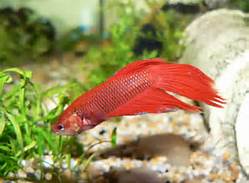
I pulled into a local Starbucks, bought a latte and joined my friend Jessica at an outdoor table. After I sat she casually asked, “So how are you?” Her tone did not carry any sympathy — she clearly didn’t know that I got laid off earlier in the week, so I filled her in. Jessica knows my story; she’s witnessed my struggle to find full-time ministry employment over the last three years. She is also a member of the church where I serve as a part-time pastor. She listened attentively to this latest development. Her face showed clear understanding and compassion. When I stopped speaking she said, “So, we have this betta fish named Rosie…”

Rosie

I’m not kidding. That was her response to my news. I blinked a couple of times and waited, wondering how a fish was somehow relevant to my current setback. She went on without preamble.

“We all love Rosie. I know it sounds silly; she’s just a fish, but she feels like part of our family.” (Jessica is married to Dan and they have two adorable little girls.) “Last week I was cleaning out Rosie’s bowl and when I went to put her back in, I accidentally dropped Rosie on the kitchen counter. There she was flopping around on our counter and I was doing my best to get her in my hand but she was too slippery. So I picked up the bowl, put its lid along the top of the counter and tried to push Rosie in, but then she fell all the way to the ground! She flopped around weakly and I thought she only had moments to live. By then I’m yelling for Dan to come help me and my girls are standing close by yelling, “Save Rosie!” “Oh, no!” “Don’t let her die!” I’m so distressed that I’m making all kinds of strange noises and Dan comes running into the room to help rescue Rosie. He calmly gets her back into the bowl and she starts to swim around but I can tell she’s just not right.

I try to prepare the girls — I want to be realistic; she’s just a fish — so I tell them that even though Rosie is fine right now, she could be dead by morning. So we get up the next morning and Rosie is still alive. I caution the girls that she could still die. Every day this week I have come home expecting to find Rosie floating at the top of her bowl, but she’s still swimming.”

And then Jessica’s strange and humorous story became a parable that tolled something in my spirit. She suddenly said, “Corrie you are like Rosie; you’re resilient.”

Jessica spoke with assurance and a smile. I was not so confident. Am I resilient? The fact is that I have gained and lost several jobs and many more opportunities over the last three years. Extended periods of unemployment combined with the regular rejection that comes with pursuing a significant dream have been like an erosion of my soul, motivation and self-confidence. I feel like these storms have stripped me of my heartiness and joviality and I’ve been left dizzy and breathless from the whirlwind of my life.

And then there is the physical buffeting! I’ve gained and lost the same 20 pounds three times. I’ve struggled with anxiety and sleepless nights. I have a new crop of silver hairs haphazardly spiking out of my dark brown waves. When I look in the mirror I see the effects that the disappointments, rejections and set backs have had on me — the story is in the slump of my posture, the slight sagging around my eyes, the delay in my smile. I’m battle worn in ways I never anticipated I would be at this age.

No, I think when I see myself in the mirror, I’m not particularly resilient.

For me the word conjures up images of Arthur and Excalibur, of the Great Wall of China, even the Brooklyn Bridge. I think in comparison that I’m not so strong, so enduring. But Rosie’s story and Jessica’s smile stuck with me. A few days later I looked it up in the dictionary.

Re-sil-ient: adjective

: able to become strong, healthy, or successful again after something bad happens

: able to return to an original shape after being pulled, stretched, pressed, bent, etc.

Two weeks have passed since I had coffee with Jessica. Three weeks since I lost my job and Rosie flopped around on the kitchen floor. These three weeks have been something of an awakening. Friends have called wanting to check in on me and offer support, knowing from past experience that I might need some extra shoring up. I don’t know who has been more surprised, them or me, to find me coping so well.

With lots of time for introspection, I’ve realized that though buffeted and tossed around, I haven’t been broken beyond repair. As the emotional effects of this recent loss lessen, under my weariness and discouragement I sense a stronger core. I’ve been through great storms of rejection, loss and despair and survived every one. (There’s got to be something of the miraculous in that.) I’m not the same as I once was. I’ve lost my idealism and naiveté about the course of my life, which I understand as a good and necessary thing, but I’m still a positive person. I’ve walked (and sometimes crawled) across the desert of spiritual crisis that comes with the difficulty of following any big dream. Along the way I’ve thought about giving up (many times), I’ve doubted myself and I’ve had some major pity parties. From that self-perpetuating mess I’ve learned to seek the things that lead to life instead of death.

Even the unintelligent betta fish knows to flop about when it finds itself out-of-water. All that flopping is an instinctual effort to somehow find water. Whether it is a puddle, a bowl or a lake — for the fish, where there is water there is life. Picturing Rosie’s struggle on the cold, dry tiles of the kitchen floor, I realize that I’ve taken on her instinct for life. After three years of flopping about, I now spend less time doubting and pitying and more time focusing on positive, true and enduring things. I’m not denying my struggle, but I’m also not giving it more than its due time and attention. I’m trying my best to seek my water source.

Two months ago I attended a large women’s conference. Kanyere Eaton, the pastor leading one of the workshops, had us read a page of self-affirmation. I recently pulled it out again. Here are some of the gems:

I am the beloved of the Lord…Before I cried for the first time, he was intimately acquainted with the sound of my voice…God specifically picked out the spiritual gifts that he invested in me and he wants me to use them for his glory. God has plans for me. The vineyard of my life is his planting. The fruit he calls me to produce has a unique capacity to nourish and enrich the lives of those who partake of it. The vineyard God has given me is mine to tend. It will grow and develop sweet fruit when I make time to nourish it. I confess that I have not always considered my vineyard significant…I am very important to God…My spiritual, emotional and physical needs are important and they deserve to be tenderly addressed. My Holy Spirit-inspired dreams are precious and they deserve serious investment. The Holy Spirit calls me, even in this season of my life, to carefully, consciously tend the vineyard of my own life. By God’s grace, I begin today.

I confess that I have not always considered my vineyard very significant, but I now I can honestly mark my report card “shows improvement.” Like Rosie, I’m making every effort to flop toward water.

Years ago I regularly practiced examen, a spiritual discipline of daily identifying my most life-giving and life-taking moments. Over the course of time you can line up your records and begin to see patterns, to see clearly the things that lead to life or death. Two weeks ago I bought a new journal just to record my examen findings, an effort to stay near my water source.

journal

Last week I flew to Denver to spend time with my brother and nephews. My 10-year-old nephew told me that his dream is to get a college scholarship for soccer, then to be a scientist and a professional lacrosse player. His silly aunt tried to gently convince him that he probably wouldn’t be able to make a living as a professional lacrosse player; he was adamant that he would. The important thing about that conversation was the beauty on Mason’s face when he shared his dreams with me. He had such hope for the future. Staring at that beauty, I suddenly realized how long it has been since I dreamed new dreams for myself.

The next day I walked into an artisan gift shop and found these round tins with beautifully engraved wood tops. The instructions say to write down my fondest dream, greatest desire, or strongest wish on a small piece of paper, put the paper in the ‘Dreambox’ and place it beside my bed. I’m supposed to hold the box every night and every morning and think on my dream, “believing with all my heart that it is so.” I’m not superstitious and I don’t believe in magic, but I do believe in hope and I know I could use some more hope in my life. I bought a Dreambox with the lid design that looks like a rose window. I’m choosing to believe what Pastor Eaton taught me, that my Holy Spirit-inspired dreams are precious and they deserve serious investment, even in this season of my life.

The Rose Window at All Souls Church, Bangor

In hindsight I can see my resilience, my strengthened core. Able to is the key phrase in the definition of resilience; that’s why Jessica was right in comparing me to her betta fish. Really, I’m just a person with a penchant to throw more tantrums than I do celebrations. God, as my water source, enables me to be strong, healthy or successful again after something bad happens. God is the author of resilience, the one who makes all things new. This reminds me of Jesus’ conversation with the Samaritan women:

Jesus replied, “If you only knew the gift God has for you and who you are speaking to, you would ask me, and I would give you living water.”

“But sir, you don’t have a rope or a bucket,” she said, “and this well is very deep. Where would you get this living water? And besides, do you think you’re greater than our ancestor Jacob, who gave us this well? How can you offer better water than he and his sons and his animals enjoyed?”

Jesus replied, “Anyone who drinks this water will soon become thirsty again. But those who drink the water I give will never be thirsty again. It becomes a fresh, bubbling spring within them, giving them eternal life.”

“Please, sir,” the woman said, “give me this water! Then I’ll never be thirsty again, and I won’t have to come here to get water.”         (John 4:10-15, NLT)

I’ve learned that much of coping and dealing with life is a choice. I’m in control of very little in my life and circumstances. I certainly didn’t want to be unemployed again, but here I am. I’m faced with choices. Do I let myself sink back into the bad habits of wallowing and tantrums or do I reach out weak hands toward my water source?

Resilience is to be like the Samaritan woman, acknowledging my need for water I cannot supply for myself. It is turning again and again to Jesus when I face hardship and asking, “Please sir, give me this water!”

Resilience is to mimic the floppings of a betta fish, whose only instinct is to seek water, the source of its very breath.

“…For he satisfies the thirsty and fills the hungry with good things.” (Psalm 107:9)

Amen and Amen.

Geriantics

Picture 026

Grandpa Ford in 2007 with his transition lenses. You should see his new modern frames!

I spend a lot of time with elderly people. Even if my visits weren’t part of my work, I would still find a way to be with them. Everyday the elderly astound and inspire me with their stories of hardships overcome, of the ripple effects of wars fought abroad and in the homes down the street, of great loves lost or found, of building families and communities with hard work greased with the intrepid hope for something better. Their stories are better than any Facebook status or Tweet I’ve ever read.

I wish I could take you along with me and introduce you to some of my friends. I wish you could listen to their stories with me, to laugh with me at their playful antics, to be wrapped in the musk of an eighty-year-old afghan, to feel the history in their paper-thin skin as they brush a kiss on your cheek or hold your hand like you’re a beloved childhood friend. I want so much for you to understand how much you would gain if you knew, really knew, someone who is 107 or 99, or 84.

Last week I met a woman who grew up in New York. Her voice still carries the slanting tones of Brooklyn. She told me how she met her husband on the “broadwalk” of Staten Island at age fifteen and married him eight years later in a double ceremony with her twin sister and her beau. She reminisced for an hour about the house they saved for and finally bought on the Island and how she and her girlfriends in the neighborhood would gab every night on her front porch. The love she had for her life beamed from her eyes. Her glow dimmed a bit as pointed her crooked, arthritic finger along her backyard and talked about the cement-block walls that separate homes and people from being neighborly in this retirement state she calls “No Man’s Land”. She shared about the death of her friends, one by one, until she outlived them all. She held my hand, patted my knee and called me honey, saying, “It’s so nice to have someone to talk to, someone who will laugh with me and keep my secrets. My friends — I wish you knew them — they were beautiful women, just beautiful.”

Not too long ago I met a beautiful woman whose married name is Lovette. She told me all about being the first woman in her family to go to college. She surpassed that by earning a Master’s degree and spent her career working for the homeless in her city. Mrs. Lovette’s Eddy is long since dead, but she speaks of him with such affection he may as well be sitting on the couch with us. I’ll never forget when she looked at me with half-winked eyes and told me, “That man! He came by his name honestly. Girl, did he love me!” Who says passion fades with age? Mrs. Lovette knows otherwise.

It’s rare that a week goes by without an offer of adoption or a marriage proposal. One afternoon I visited a man whose wife was away on an errand. As I sang to him “My Bonny Lies Over the Ocean” and “You Are My Sunshine”, he gripped my hand and winked. He flirted with me shamelessly for a half hour — dementia making him forget that he was already married and old enough to be my grandfather. A colleague later told me that after I left the room he said, “I want to marry that girl. What a girl! Make her come back so I can propose.” My computer was directly across from his room, in sight of the recliner where he sat. He winked and waved for hours, calling out, “Hey sweetie!”  I couldn’t help but wave back. (I may have given in and winked too, but don’t tell my boyfriend.)

The effects of dementia are difficult for family members to witness. Imagine your mother looking hale and hearty as she wears a diaper and no longer remembers your name or your father always wearing a blank expression, no longer capable of speech, of dressing or feeding himself. As a stranger, I have no memories to compare to the present reality to cause me grief. I meet people only as they are and approach each of them as beloved creations of God worthy of my respect, time and care. Sometimes these visits are easy and delightful and other times they are difficult puzzles.

I met Manny in a memory care unit of an assisted living facility. He was snoring (with drool) in a chair ten feet from a blaring TV. A touch to his hand woke him up. I tried to engage him in simple conversation to assess his comprehension level. After just a few moments it was clear that Manny has few verbal capabilities left. His words were garbled nonsense. He seemed pleased with the attention though, so I continued to speak with him, make eye contact, and to sing to him. He smiled and laughed. After about twenty minutes Manny was getting drowsy so I said goodbye and thanked him for sharing his smile with me. Then, clear as could be, he said, “Why the hell not?” As though it was no brainer to spend time with a thirty-something woman willing to hold his hand.

There are so many priceless stories I could share with you. Like the afternoon I led a quartet of elderly women in a rousing and ear-piercingly off-key rendition of Happy Birthday as they batted a balloon wheelchair to wheelchair. Or the time Dorothy, who is rarely able to finish a sentence before she loses her thought, looked at me and said, “I love you. I’d like to adopt you as my son or daughter.” Or the beautiful moments when I’ve discovered the song that unfurls the poignant memories within someone who hasn’t spoken in months and they begin to sing along.

Such beautiful people are all around us. They are in the senior centers we drive past every day on our way to work, in our neighbors in-law suite, in the pews of our churches, volunteering in our polling places and libraries and schools. The elderly are all around us. They have so much love and perspective and history to share with us. They need our time and care. They deserve our respect. But so many of us do not see them. When we pass them in the grocery story we see their wrinkles, their shuffling gait, their canes and walkers, their mismatched clothes and their comb-overs and tight perms. We look but do not see the WWII Veteran, the hardworking farmer who stocked his community’s shelves, the pilot of the first commercial jumbo jet, the social worker who found respite for the homeless in her city. Unfortunately, our response to the growing mass of elderly in America is to put them in facilities with other elderly and think our responsibility fulfilled. Put them in a place and forget them seems to be our unspoken motto. So much is our loss.

My own grandparents, both eighty-six, are a delight to me and a regular reminder of my purpose and place in the world. More than once I’ve been talking to them on the phone only to have them interrupt and say, “Well, that’s great honey, but we’ve got to go. We’ve got to go visit our elderly. Love you. Bye!”

Touché, grandma and grandpa. Thank you for teaching me about who is important.

Picture 033

Grandma Ford and I take a break from a walk in her local park in 2007.

Mercy Misunderstood

Parole board rejects clemency for killer
Columbus, Ohio — A condemned Cleveland killer moved one step closer to execution Tuesday despite a rare plea for mercy from the prosecutor overseeing his case and support from nearly half of a board that previously voted unanimously against him. The Ohio Parole Board voted 6-4 to turn down a request for clemency for death row inmate Billy Slagle, sentenced to die for stabbing a neighbor 17 times almost three decades ago.  (The Arizona Republic, Wed. July 17, 2013, pg. A2, emphasis mine)

Mercy is a short word, widely misunderstood and sometimes wildly misused. Exodus 34:6-7 says, “The Lord, the Lord, a God merciful and gracious, slow to anger, and abounding in steadfast love and faithfulness, keeping steadfast love for the thousandth generation, forgiving iniquity and transgression and sin…” Mercy is one of the fundamental expressions of God’s character. As such, it is critical that we know what mercy is and what it is not.

The clip from The Arizona Republic is just one of many recent media examples of how we in the 21st century mistake clemency for mercy. Clemency is a power of certain public officials, like the governor, president or a judge, to lessen the punishment of a prisoner. On July 9th of this year a Florida man named Marshall Gore was 25 hours from death by lethal injection when a judge stopped his execution. Though a jury had found Gore guilty of murder, the judge felt his sentence did not take into account certain facts, so Gore remains alive. That’s clemency and it’s a pretty big deal, but it is NOT the same as the mercy we have received from God.

Imagine yourself a criminal. You are tried and found guilty of breaking the ultimate law, God’s law. Your sentence is death and now you live on death row waiting for your execution. Mercy is not just God lessening your penalty from death to life in prison. Mercy is God sending his only son to die the criminal’s death in your place. Mercy is God smashing the chains that bind your hands and feet, shattering your cell door from it’s hinges and crumbling the prison to ash. Mercy is God setting you free forever and then welcoming you to live eternally in his kingdom.

God is merciful, gracious and abounding in love, so never mistake mercy for clemency. Mercy is so much more!

But you are a chosen people, a royal priesthood, a holy nation, God’s special possession, that you may declare the praises of him who called you out of darkness into his wonderful light. Once you were not a people, but now you are the people of God; once you had not received mercy, but now you have received mercy. 1 Peter 2:9-10

Don’t Just Pray – Part 2

“Just pray about it.”

We’ve all probably been on the giving or receiving end of this bit of advice. Usually we hear it after we pour out a steaming hot mess of things like doubt, fear, confusion or anger. We take the risk of being vulnerable with a trusted friend or mentor, we expose the mess of our lives to someone we hope will listen, who may have some new, wise guidance, and then their response is, “just pray about it.”

On the one hand, this is fantastic advice. The evidence of the power of prayer in the Bible is as bright as thousands of bulbs that light the Rockefeller Square Christmas tree each year. Open, honest and bold communication of the faithful to their heavenly Father often leads to divine intervention. Do you recall the story of a woman named Hannah in the Old Testament? Her anguished prayers caused God to act.

Samuel 1:13 says, “Hannah was praying in her heart, and her lips were moving but her voice was not heard.” Her prayers were so fervent that when the priest Eli saw her, he assumed she was drunk and rebuked her. Hannah faces Eli and corrects him saying,

“I am a woman who is deeply troubled. I have not been drinking wine or beer; I was pouring out my soul to the Lord. Do not take your servant for a wicked woman; I have been praying here out of my great anguish and grief.” (vv. 15-16, NIV)

So corrected, Eli speaks this blessing over her, “Go in peace, and may the God of Israel grant you what you have asked of him.” Hannah prayed and God “remembered” her (v. 19) by opening the womb he had previously closed (v. 5).

Because of prayer a barren woman conceived and birthed a son.

This is not an isolated incident. In the Bible, prayer regularly prompts change; it brings resolve, stops plagues and leads to miraculous acts of remembrance. Prayer, literally and metaphorically, leads to life.

Prayer is a direct line of communication with the Creator and Sustainer who out of compassion and love, continuously pours out blessing on his people. As such, prayer is something we should do regularly, eagerly, expectantly and most of all, reverently. But too often we approach prayer the same way we do an ATM.

When I need cash, I go to the ATM, insert my card, make a few simple demands at the push of a button and, voilà – out pops my money! We all know better than to liken God to an ATM, so why do so many of us use prayer like a debit card? Don’t we often speak words of prayer hoping we ‘push the right buttons’ and then wait to receive the ‘cash’ to which we are entitled?

Don’t misunderstand me – there’s nothing wrong with expecting great things from prayer! But spiritual things are seldom as simple as taking money from an ATM.

What I didn’t mention earlier about Hannah is that she prayed for a child for years. Hannah was overcome with grief. Like many grieving people, she lost her appetite and probably that healthy glow people call a luster. Hannah wept and she prayed. She prayed and she wept. The Bible says this went on “year after year” (v. 5). While Hannah grieved, her husband’s other wife  (who had many healthy children) taunted Hannah cruelly for her barrenness.

Prayer is powerful. It prompts God to compassionate and merciful action on behalf of his people, but in Hannah’s story we learn that the effects of prayer are not always prompt. That is why it can be so disheartening and insensitive to tell an aching soul, “Just pray about it.” If this is all we say before we walk away from a friend, he or she may feel that we’ve minimized their grief or been deaf and blind to their desperation.

For those who haven’t been utterly ravaged by time and circumstance, for those who still have enough hope to cling to the promises of prayer, the expectation of prompt results carried by the phrase “just pray about it” may be the nick that severs their connection to hope or even to God.

If you have a desperate need or desire and have been waiting and praying for days or months for fulfillment, how strong is your hope? Can it bear the weight of silence or the terrible agitation that grows as time beats through your veins and nothing happens?

What if your season of need stretches into months like Hannah’s? What will your faith be like then? What will you need from your friends? Just prayer, or prayer and…something?

Prayer is an awesome thing but when we are caring for aching people, there are things that complement prayer and bring consolation. Don’t just pray and walk away; your friend does not have that luxury – they are in a sense held captive (think slavery) by their need. They cannot conceptualize life or their future without that thing for which you may casually pray. Instead of just praying, consider these:

  1. Pray and pour out your soul – Too often prayer is an exercise of suppression rather than passion. There’s no need to hide or hold back our feelings from God because he sees everything in our souls. The good news is that it’s safe to confess it all to him. Let yourself be emotional as you pray. Hannah let even the nasty stuff like bitterness and anguish pour out of her soul. It’s only when we pour out the nasty stuff that we make room for God to fill our souls with consolation.
  2. Pray and listen – Don’t think prayer ends when you stop speaking. Make time and space to listen into the silence and stillness for the voice of God. Don’t rush off; stay rooted in your seats, be still and know that God is in this with you.
  3. Pray and wait and pray again – Hannah prayed the same prayer for years. Years! She’s one to emulate. If someone shares with you their requests, keep praying. Go back to them next week, next month or next year and get an update. Pray again. Listen with them. Wait with them. Pray again. In this way you bear one another’s burdens.
  4. Pray and lament – Lament is not just emotional prayer. To lament is to cry out to God against the things that should not be – against injustice, cruelty and abandonment, hunger and despair – against anything that falls short of God’s character and provision. The Israelites lamented throughout their history and God remembered them, which means he acted for them.

Out of respect to people like Hannah, I must acknowledge a very difficult truth before I close: prayer will not always lead to the things we so desperately seek or expect. God may not give us what we want, even if we are faithful and in a sense ‘deserving.’ And there will be times when it seems that God gives no response to our prayers. (This is one of the mysterious things about God that makes everything in me go quiet.)

But these things do not mean that our prayers are empty or pointless, nor are they signs that God does not love or bless us.

I have many friends who are haunted by infertility. Unlike Hannah, some of these faithful women will never conceive or welcome a healthy child into the world. I hate that this is their reality. I don’t know what their desire or loss feels like but I certainly do pray with and for them. But I don’t just pray.

I pour out my soul with them. I listen into the silence with them. I lament their empty wombs and their grief. I wait for God to move. I expect God to move. I call upon God to do something that matches his wonderful character. I pray and wait and pray hoping that somehow, and in some way, God will make all things new.